The Question Every Customer Asks Before Booking a Leather Interior
The decision to upgrade a vehicle’s interior to leather is usually straightforward. The decision of which leather to choose is rarely as simple, and it is the question that takes up most of the consultation time when customers sit down with an upholstery specialist. With hundreds of color options, multiple leather grades, a range of stitching patterns, and the choice between single-tone and two-tone configurations, the selection process can feel overwhelming before it even begins.
The good news is that the decision-making framework is actually quite clear once the key variables are understood. Leather type, grade, color, and stitching each serve a specific function in the finished result, and each choice narrows the options in a logical sequence. This guide walks you through every decision in that sequence — from understanding what distinguishes a quality automotive leather from a budget one, to matching color and stitching to your vehicle and your lifestyle, to understanding why the brand behind the leather matters as much as the hide itself.
By the end, you will not only know how to make the right choice — you will have the vocabulary to walk into a consultation and articulate exactly what you want, which makes the entire process faster, more enjoyable, and more likely to produce a result that exceeds your expectations.
Understanding Leather Grades and Types
Not all automotive leather is created equal, and the grade of leather used has a direct bearing on how the finished interior looks, feels, and holds up over time. As Kelley Blue Book explains in its leather seats overview, automotive leather seats are covered in upholstery made from animal hides — mostly cowhide — that have been tanned and coated for color and protection. The quality spectrum ranges from full-grain at the top to corrected-grain at the entry level, with each grade reflecting how much of the natural hide structure is preserved or altered during processing.
Full-grain leather
Full-grain leather is the highest grade available. It uses the outermost layer of the hide with the natural grain fully intact — no sanding, buffing, or surface correction is applied. This preserves the hide’s original fiber density, which makes full-grain leather the most durable and breathable option available. The natural surface markings — subtle variations in grain pattern, the occasional small mark — are part of the material’s character rather than defects to be corrected. Full-grain leather develops a patina over time that actually improves its appearance with age, making it the choice for drivers who want the interior to grow more distinguished-looking the longer they own the vehicle. It is also the most expensive grade and requires the most consistent maintenance to protect the surface from drying and cracking.
Top-grain leather
Top-grain leather is the most widely used grade in premium automotive upholstery, including in the Katzkin leather systems installed through ASC. The outermost surface layer is lightly sanded to remove natural imperfections, and a uniform grain pattern is applied to create a consistent, controlled appearance across the entire hide. This produces a surface that is visually cleaner and more uniform than full-grain — which is particularly important in an automotive context where multiple hides must be matched across seats, side panels, headrests, and bolsters. Top-grain leather is also more resistant to staining than full-grain because the surface treatment provides a degree of barrier protection. The trade-off is a very slight reduction in breathability and the natural character that full-grain develops over time.
Corrected-grain and bonded leather
Below top-grain, corrected-grain leather involves more aggressive surface sanding and the application of a polymer coating that essentially creates a new surface layer over the natural hide. The result is a very uniform, easy-to-clean surface, but one that is significantly less breathable, less durable over time, and less pleasant to the touch than either full or top-grain. Bonded leather — sometimes marketed as “genuine leather” — is an entirely different product: scraps and fibers of leather bonded to a polyurethane or latex backing. It is not appropriate for quality automotive upholstery and is not used in the Katzkin systems available through ASC. When evaluating any leather interior product, confirming that the material is top-grain or above is the most important quality checkpoint.
Choosing Your Color: More Than a Personal Preference
Color is the most visible dimension of a leather interior choice and the one most drivers focus on first — but it is also where the most common mistakes are made. A color that looks beautiful in isolation on a sample swatch can feel wrong in the context of the vehicle’s interior architecture, exterior color, and the lighting conditions in which the car is typically used. Approaching color selection systematically produces a more satisfying long-term result than choosing purely on emotional response to a swatch.
Matching or contrasting the vehicle exterior
The relationship between interior and exterior color is one of the most significant design decisions in a leather interior project. Some combinations create a seamless, cohesive impression — a silver exterior paired with a charcoal or dark gray interior, for example, or a white vehicle with a cream or ivory cabin. Others use deliberate contrast to create visual energy — a black exterior with a warm cognac or saddle tan interior, or a deep navy body with a rich cream cabin. Neither approach is inherently superior; what matters is that the combination is intentional rather than arbitrary, and that both colors are evaluated together rather than in isolation.
Light versus dark interiors: practical considerations
Beyond aesthetics, the choice between light and dark interior colors has practical implications that vary by lifestyle and usage. Light-colored interiors — cream, ivory, beige, light tan — create an open, airy cabin atmosphere and are less prone to heat retention on hot days. They also show dirt, scuff marks, and transfer from dark clothing more readily than dark alternatives, which means more frequent cleaning is required to keep them looking their best. Dark interiors — black, charcoal, dark brown — are more forgiving of daily wear and show fewer marks between cleaning sessions. They absorb more heat in direct sunlight, which can be a consideration in summer months but is offset by the thermal management benefits of seat comfort features. For drivers who prioritize a low-maintenance cabin, darker leather with a satin or semi-gloss surface finish is typically the most practical choice. Our seat comfort upgrade service — which covers heated, ventilated, and ergonomic seat options — pairs naturally with leather interior projects for exactly this reason.
Two-tone combinations
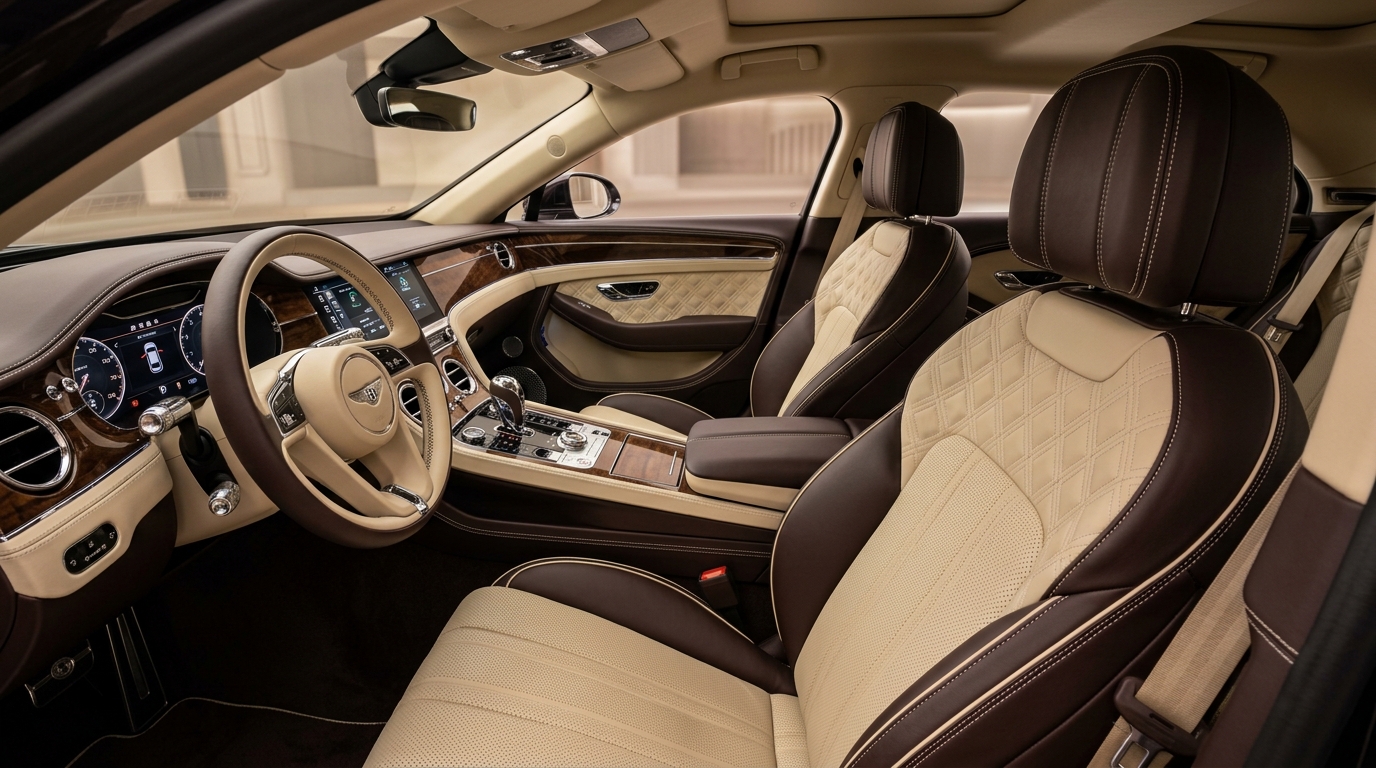
Two-tone leather interiors — where the primary seat surface uses one color and the bolsters, stitching contrast panels, or piping use a second — are one of the most enduring design choices in custom automotive upholstery. They add visual depth and a tailored quality to the interior that single-color installations rarely achieve, and they allow a degree of personal expression that goes beyond simply choosing a color. Common and highly effective combinations include black with red or white accents, tan with dark brown bolsters, and gray with cream center panels. Katzkin’s system offers limitless two-tone combinations across its 80-plus color palette, making the design possibilities genuinely extensive. Browsing the ASC leather catalogues is the most effective way to explore the available color combinations and identify the ones that resonate most strongly for your specific vehicle.
Stitching Patterns and Personalization Details
Stitching is the detail that transforms a leather interior from a material upgrade into a genuinely bespoke piece of craftsmanship. The right stitching pattern and color elevates the perceived quality of even a straightforward single-tone leather installation, and the wrong choice — or the absence of any intentional stitching consideration — leaves the interior looking generic despite the quality of the material beneath it.
Stitching color
Stitching color can either harmonize with the leather surface or create deliberate contrast. Matching stitching — thread color selected to blend with the hide — creates a quiet, sophisticated result that lets the leather’s texture and color carry the visual weight. Contrast stitching — a lighter thread on a dark hide, or a bold color such as red, orange, or white against a neutral background — creates visual energy and a sporting or bespoke character that reads immediately as custom. The choice depends on whether you want the interior to feel understated and luxurious or expressive and individual.
Stitch patterns
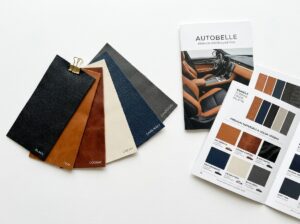
Beyond color, the pattern in which stitching is applied to seat surfaces contributes significantly to the interior’s character. A simple perimeter stitch around each panel is the most restrained option — clean, functional, and appropriate for any aesthetic direction. Diamond quilting — a pattern of diamond-shaped stitch grids across the seat surface — creates a classic, premium aesthetic associated with sports and luxury vehicles. French seam stitching along bolsters and center panels adds a tailored, hand-finished quality. Custom embroidery — initials, logos, or graphic elements stitched into headrests or center panels — provides the highest level of personalization available. Our seat options page covers the full range of stitching and embroidery choices available through ASC’s custom interior service.
Airbag Compatibility: The Safety Question Nobody Should Skip
Every vehicle owner considering a leather interior upgrade should ask one specific question before committing to any product or installer: is this leather system certified safe for use with my vehicle’s airbag system? It is not a hypothetical concern. Side-impact airbags in modern vehicles are frequently routed through the seat bolster — the outer edge of the seat back — and the leather cover must be engineered to split cleanly at that location during deployment rather than restricting or misdirecting the airbag’s expansion.
This is one of the most important reasons why the brand behind the leather system matters enormously. Katzkin leather interiors — the system installed through ASC — are certified by major OEMs for vehicles equipped with advanced airbag technology. Independent testing by MGA Research ensures compliance with National Highway Safety Administration standards, and Katzkin carries $51 million in product liability insurance with a flawless record of zero claims across its entire installation history. For drivers upgrading vehicles with side-impact seat airbags — which includes virtually every vehicle produced in the last decade — this certification is not optional. It is the baseline requirement for any reputable leather interior installation.
The Katzkin Advantage: Why It Matters
Understanding why ASC uses Katzkin leather exclusively — rather than generic aftermarket upholstery kits — requires understanding what makes Katzkin categorically different from the alternatives available in the automotive upholstery market.
Vehicle-specific patterns for a factory fit
Katzkin maintains over 2,000 vehicle-specific patterns covering a vast range of makes, models, and years. Each pattern is engineered precisely for the seat architecture of a specific vehicle — the exact contours, mounting points, panel geometry, and bolster profiles of your seats specifically, not a generic approximation that requires stretching or bunching to fit. The result is an installation that sits on the seat as though it were made for that vehicle at the factory, because in a meaningful sense, it was. Generic kits sourced from aftermarket suppliers are almost always a compromise between a standard pattern and a specific seat geometry, and the visual evidence of that compromise is immediately apparent in the finished result.
More than 80 colors and limitless combinations
Katzkin’s color range spans over 80 individual colors across warm, cool, and neutral palettes — from classic black and cream to cognac, burgundy, navy, saddle tan, and beyond — with limitless two-tone combination options. This depth of choice means that every driver, regardless of their vehicle’s exterior color, interior architecture, or personal aesthetic preferences, can find a combination that is genuinely right for their specific situation rather than settling for the closest available approximation.
Officially licensed for major brands
Katzkin interiors are officially licensed for Ford, Chrysler, Dodge, Jeep, GM, Foose Design, and Rawlings — meaning that these manufacturers have recognized and endorsed Katzkin’s products for use in their vehicles. This licensing reflects the same quality standard that manufacturers apply to their own OEM-supplied components, and it is a meaningful indicator of the system’s engineering integrity for brand-specific installations.
A comprehensive warranty across North America
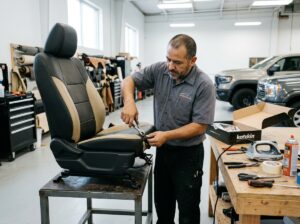
Every Katzkin installation through ASC is backed by a 3-year / 60,000 km warranty covering the full North American market. This warranty provides meaningful protection against material defects and workmanship issues over the period that matters most — the first three years of ownership, when any problems with a leather installation are most likely to surface. As Edmunds notes in its analysis of automotive upholstery materials, the quality of the underlying material and the precision of the installation are the two variables that determine long-term satisfaction with a leather interior — and the Katzkin system through ASC addresses both directly.
Making the Final Decision: A Practical Approach
With the framework established, the practical path to a decision is straightforward. Start with the leather grade — top-grain Katzkin leather covers all performance, durability, and safety requirements for the vast majority of drivers and vehicles. Then establish the color direction by looking at the vehicle’s exterior and existing interior materials and deciding whether you want harmony or contrast. Browse the two-tone combinations that appeal most in the leather catalogues and identify two or three that feel right. Then choose stitching color and pattern as the finishing detail that personalizes the result.
The consultation process with the ASC team is designed to guide you through exactly this sequence — with physical samples, vehicle-specific mockups, and the benefit of experience across thousands of completed installations across British Columbia. Whether you are upgrading a daily driver, refreshing a vehicle you plan to keep for many years, or building a themed interior as part of a broader customization project that might also include a sunroof installation or full trim and upholstery refresh, the leather interior decision becomes straightforward when you have the right guidance and the right product behind you. Visit our leather interiors page to explore the full range of options — or contact our team to arrange a consultation and start building the interior your vehicle deserves.