Keeping a vehicle looking new takes more than occasional washing and waxing. Everyday driving exposes automotive paint to road debris, dust, harsh sunlight, insect residue, bird droppings, tree sap, and other environmental contaminants. Even a relatively new vehicle can develop visible paint damage after months of commuting, highway travel, parking outdoors, and regular use.
For American drivers who want to preserve their vehicle’s appearance, two popular options are paint protection film (PPF) and ceramic coating. Both can help maintain a vehicle’s finish, but they work in different ways and address different problems. Understanding the distinction is essential before spending money on either service.
Paint protection film is a transparent or specialty-finish film applied over painted body panels to help absorb physical impacts and prevent damage to the paint underneath. Ceramic coating is a liquid surface treatment that bonds to the vehicle’s finish, improving gloss, water behavior, and resistance to certain contaminants. It can make routine washing easier, but it is not designed to stop rocks from chipping paint.
The best option depends on how you drive, where you park, your budget, and what you want to protect. A driver who regularly travels on gravel roads may prioritize impact protection, while someone who mainly drives around town and wants a glossy, easier-to-clean vehicle may prefer ceramic coating.
In some situations, combining the two treatments makes the most sense. Paint protection film can shield vulnerable panels from physical damage, while ceramic coating can improve surface maintenance and appearance. Professional installation and appropriate care are important regardless of which option you choose.
If you are exploring ways to improve and preserve your vehicle’s appearance, visit ASC Automotive Styling to learn more about automotive styling and protection options.
What Is Paint Protection Film?
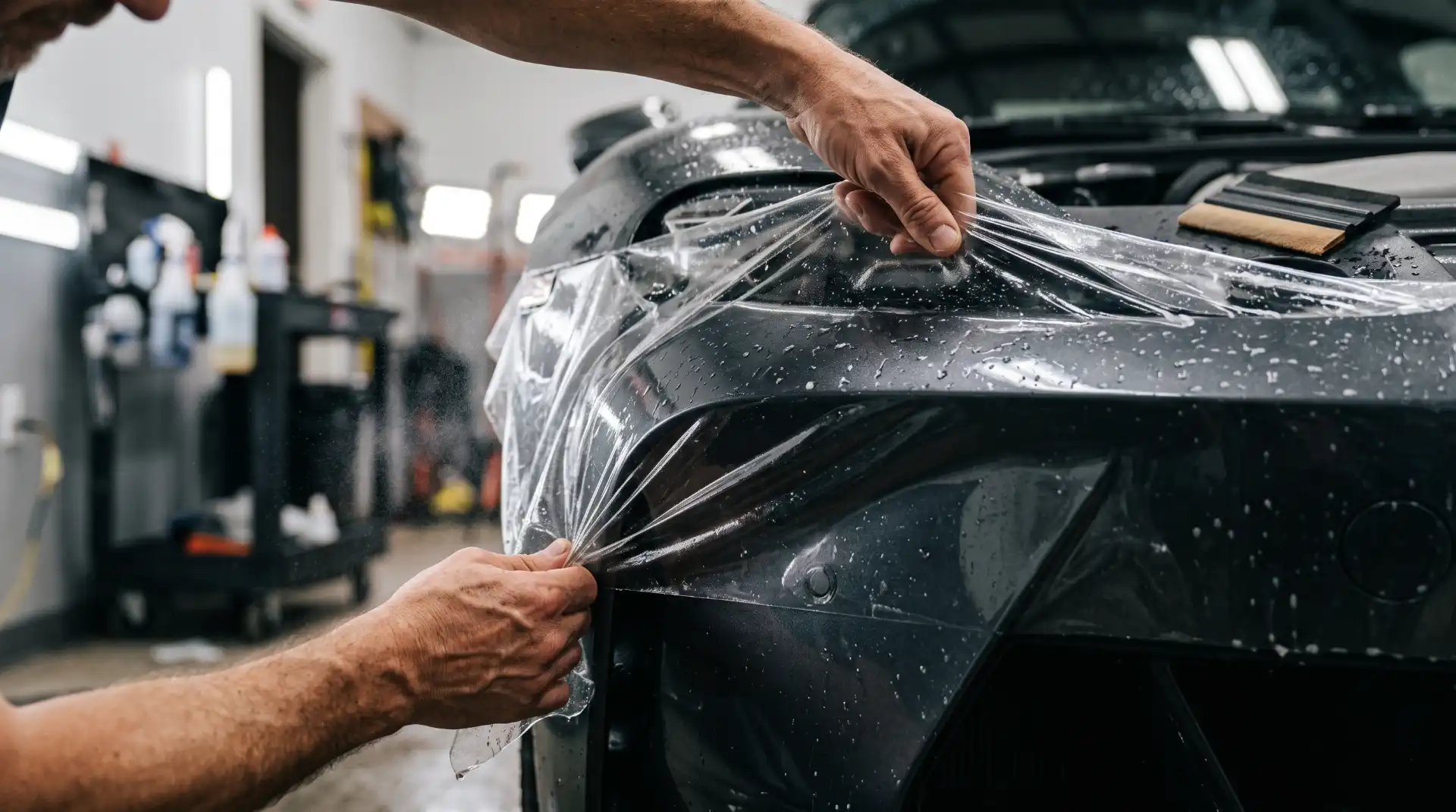
Paint protection film, commonly called PPF or a clear bra, is a flexible protective material installed over a vehicle’s painted surfaces. Modern automotive PPF is generally made from polyurethane and designed to provide a barrier between the original paint and common sources of physical damage.
Unlike waxes or liquid coatings, PPF creates a tangible layer over the vehicle’s finish. When a small rock strikes a properly protected panel, the film can absorb some of the impact and help prevent the underlying paint from chipping. It can also reduce the risk of certain scratches, stains, and other surface damage.
According to 3M’s official US Paint Protection Film information, PPF can help protect vehicle paint against rocks, bugs, sand, keys, road debris, and environmental exposure. Some modern films also include self-healing technology that helps minor surface marks disappear when exposed to appropriate heat.
How Paint Protection Film Works
PPF works by placing a durable physical barrier between the environment and the vehicle’s paint. When debris hits a covered panel, the film absorbs or disperses some of the force that might otherwise damage the paint.
The level of protection depends on the film’s construction, the severity of the impact, the area covered, and the quality of the installation. PPF is particularly useful on front-facing and high-impact areas, such as the hood, front bumper, front fenders, and side mirrors.
For example, a driver who spends several hours each week on American highways may encounter small stones kicked up by trucks and other vehicles. Without protection, those impacts can leave chips in the clear coat and paint. Properly installed PPF can reduce the likelihood of damage to the covered surfaces.
However, paint protection film is not indestructible. Severe impacts can damage the film, and a sufficiently forceful strike may still affect the paint underneath. PPF also cannot prevent dents caused by major impacts or protect uncovered panels.
Self-Healing PPF and Modern Film Technology
Some premium paint protection films feature a self-healing top layer. This technology can help minor surface marks fade under suitable heat conditions, which may come from sunlight or another manufacturer-approved source.
Self-healing does not mean the film can repair every scratch. Deep cuts, punctures, substantial abrasions, and damage that reaches through the film generally require professional assessment or replacement of the affected section.
Film products also differ in appearance. Gloss PPF is designed to maintain or enhance a shiny finish, while matte film can create a satin appearance or help protect an existing matte finish. Some products offer additional water-repellent properties, but the performance varies by manufacturer and product line.
When choosing a film, ask about clarity, thickness, warranty coverage, resistance to yellowing, installation methods, and replacement procedures. These details are more useful than relying on a general claim that one film is the strongest or most advanced.
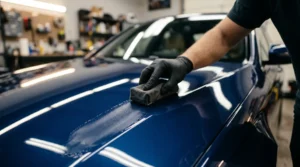
What Is Ceramic Coating?
Ceramic coating is a popular option for drivers who want a glossy finish and easier vehicle maintenance. For a more detailed explanation of application, preparation, and long-term care, read our guide to ceramic coating for cars, which explores the benefits and maintenance requirements of this type of paint protection.
The result is a surface that generally has improved gloss, water repellency, and resistance to certain contaminants. Water may form beads and roll off more readily, and dirt can be easier to remove during routine washing.
Ceramic coating is often chosen by drivers who want their vehicles to maintain a polished appearance without frequent waxing. It is suitable for many daily drivers, luxury vehicles, sports cars, and enthusiast-owned cars.
However, the term ceramic coating covers products with different formulations and performance levels. A consumer spray marketed as ceramic protection is not necessarily equivalent to a professionally applied coating that requires extensive surface preparation and controlled curing.
How Ceramic Coating Protects Automotive Paint
A ceramic coating bonds to the prepared surface and changes how water and contaminants interact with it. Its main advantages are related to surface behavior, appearance, and maintenance rather than absorbing physical impacts.
A quality coating can help reduce the adhesion of certain contaminants and make regular washing more manageable. Its slick, glossy finish can also enhance the visual depth of a vehicle’s paint, particularly when the paint has been properly polished beforehand.
Despite these benefits, ceramic coating does not form the same kind of physical cushion as PPF. A rock striking a painted bumper can still chip the paint, even when the surface has a ceramic coating.
Likewise, ceramic coating does not make a vehicle scratchproof. Improper washing, abrasive brushes, dirty towels, and contact with rough surfaces can still cause swirl marks and scratches. Its resistance to chemicals and staining also has limits, so contaminants should be removed promptly.
Does Ceramic Coating Eliminate Car Washing?
No. Ceramic coating can make washing easier, but it does not make a vehicle maintenance-free. Dust, pollen, road film, mineral deposits, and other contaminants can still accumulate on a coated car.
Drivers should continue to follow a consistent washing routine using suitable automotive shampoo and clean washing equipment. Avoiding harsh chemicals and abrasive cleaning tools helps preserve the coating’s performance.
It is also important to understand that water beading alone does not provide a complete measurement of coating health. A surface may lose some of its water-repellent behavior because of accumulated contamination rather than because the coating has completely failed. Appropriate cleaning and, where recommended, maintenance products may help restore performance.
Paint Protection Film vs. Ceramic Coating: The Main Differences
Although both products are marketed as paint protection, they serve different purposes. Understanding those differences makes it easier to choose a solution that fits your driving habits and expectations.
| Feature | Paint Protection Film (PPF) | Ceramic Coating |
|---|---|---|
| Primary purpose | Physical protection against chips and certain scratches | Surface protection, gloss, and easier cleaning |
| Rock-chip protection | Helps absorb impacts on covered panels | Does not meaningfully prevent rock chips |
| Minor surface marks | Some films have self-healing properties | Does not self-heal scratches |
| Gloss and appearance | Available in gloss and matte finishes | Enhances gloss and surface depth |
| Water repellency | Depends on the film’s surface properties | Usually a major feature |
| Maintenance | Requires appropriate washing and edge care | Requires appropriate washing and coating care |
| Coverage | Applied to selected panels or larger areas | Applied to compatible surfaces, depending on the product |
| Installation | Film fitting, positioning, and edge finishing | Surface preparation, application, and curing |
| Repair approach | Damaged sections may need film replacement | Coating may require preparation and reapplication |
| Best use | Drivers concerned about physical paint damage | Drivers prioritizing gloss and routine maintenance |
The important takeaway is that PPF and ceramic coating are not interchangeable products. PPF is the stronger choice when the primary concern is physical damage from road debris. Ceramic coating is more suitable when the primary goal is improved appearance, water behavior, and easier cleaning.
Which Offers Better Protection Against Rock Chips?
Paint protection film is the clear choice for drivers who regularly encounter loose gravel, construction debris, or highway traffic that throws small stones toward the front of their vehicles.
The film creates a physical barrier that can absorb some of the impact. A ceramic coating, even a premium one, is not designed to perform this role. Its thin protective layer cannot provide the same impact absorption as a dedicated film.
Consider a driver who commutes daily on an interstate behind commercial trucks. The front bumper, hood, fenders, and mirror housings may face repeated exposure to flying debris. Applying PPF to these areas can reduce the risk of visible paint chips and help preserve the factory finish.
By contrast, a driver who mainly travels on local roads at moderate speeds may have less exposure to repeated high-speed debris impacts. That driver might prefer ceramic coating if easier cleaning and a glossy finish are the primary goals.
Driving conditions vary, so neither choice guarantees damage-free paint. The amount of protection depends on coverage, product quality, installation, and the severity of the hazard.
Which Is Better for Scratches?
The answer depends on the type of scratch.
PPF can help protect against some minor abrasions, scuffs, and surface marks. Certain self-healing films can reduce the visibility of light marks in the film’s top layer under appropriate conditions. If the damage is severe enough to cut through the film, however, the affected area may need replacement.
Ceramic coating can improve resistance to some surface contamination and minor wear, but it should not be treated as a substitute for a physical protective layer. It does not reliably prevent deep scratches, key marks, or damage from hard objects.
For owners who are particularly concerned about door-area scuffs, scratches from road debris, or damage to vulnerable painted panels, PPF is usually the more relevant investment.
Cost of PPF vs. Ceramic Coating in the United States
Cost is an important consideration when choosing automotive paint protection. Prices vary considerably by vehicle size, product quality, location, installer experience, paint condition, and the amount of preparation required.
A compact sedan may cost less to protect than a large SUV or pickup truck because it generally has less surface area and may require less material. A vehicle with complex curves, deep recesses, or difficult-to-access body panels may also require additional installation time.
How Much Does Paint Protection Film Cost?
PPF is typically more expensive than ceramic coating when comparing similar vehicles and professional services. The installation involves precision cutting or pattern fitting, careful positioning, managing the film around curves, and finishing the edges.
Partial coverage can make PPF more accessible to drivers who want to protect the most vulnerable areas without covering the entire vehicle. Depending on the installer, packages may cover door cups and edges, mirror caps, the front bumper, portions of the hood and fenders, or the full front end.
Full-vehicle PPF generally costs substantially more because it requires considerably more film and labor. Premium film products and complicated body designs can increase the price further.
For a realistic comparison, request written estimates for the same coverage areas. One quote might include only a partial hood, while another includes a full hood, fenders, bumper, and mirrors. Comparing those totals without checking coverage can lead to the wrong conclusion.
Ask whether the quote includes paint correction, removal of existing film, edge wrapping, taxes, and warranty documentation. Also confirm what happens if the film develops lifting edges, visible contamination, or other installation-related problems.
How Much Does Ceramic Coating Cost?
Ceramic coating often has a lower starting cost than extensive PPF coverage, although premium coating packages can still represent a substantial investment.
The final price depends on the coating product, vehicle size, paint condition, and amount of preparation. A vehicle with swirl marks, oxidation, or other visible defects may need paint correction before the coating is applied.
This preparation matters because ceramic coating is not a paint repair product. Applying a coating over a damaged finish will not automatically eliminate the defects underneath. In some cases, the coating’s gloss can make existing imperfections more noticeable.
Professional services may include a wash, chemical decontamination, clay treatment, polishing, coating application, and curing time. Ask for a detailed description of what the package includes rather than choosing solely by the advertised number of years of protection.
Is the More Expensive Option Always Better?
Not necessarily. The right investment is the one that addresses your actual risks and priorities.
A driver who parks outdoors, travels on gravel roads, and wants to avoid repainting a chipped front bumper may benefit more from targeted PPF than from an expensive coating alone. A driver who parks in a garage, travels mostly on paved streets, and values a glossy, easy-to-clean finish may be satisfied with ceramic coating.
It is also worth considering the cost of future repairs. Factory paint repairs can be expensive, particularly when they involve metallic colors, specialized finishes, or multiple panels. Preventing certain types of damage may help preserve the original finish, although neither treatment guarantees higher resale value or eliminates the need for repairs.
Rather than spending the largest possible amount upfront, compare the cost of protection with your expected use of the vehicle and the areas most likely to be damaged.
Durability: How Long Does Each Option Last?
Longevity is one of the most common questions drivers ask before purchasing paint protection. There is no single lifespan that applies to every PPF or ceramic coating product.
The manufacturer’s specifications, environmental exposure, installation quality, and maintenance habits all influence performance. A vehicle driven daily in harsh conditions may experience different wear from one kept in a garage and driven occasionally.
How Long Does Paint Protection Film Last?
Quality PPF products are designed for long-term use, but durability depends on the specific film and its warranty. For example, 3M’s US product information for Paint Protection Film Series 150 describes a product with self-healing technology and a 10-year consumer warranty, subject to the applicable terms.
That warranty should not be interpreted as a promise that every installation will look perfect for ten years under all conditions. Warranty coverage, exclusions, maintenance requirements, and the handling of installation issues vary by product and circumstance.
Over time, a film can experience staining, scratches, edge lifting, discoloration, or other wear. The severity depends on the product, exposure, and care. Professional inspection can help determine whether an affected section can be maintained or needs replacement.
How Long Does Ceramic Coating Last?
Ceramic coating durability varies widely. Some consumer products are designed for relatively short-term use, while professional coatings may advertise multi-year performance when applied correctly and maintained according to instructions.
A manufacturer’s durability claim is not necessarily a guarantee of identical performance in every climate or driving situation. Frequent washing with unsuitable products, heavy contamination, prolonged outdoor exposure, and poor application conditions can affect results.
When comparing coatings, ask what the durability claim actually means, what maintenance is required, and whether the warranty covers product defects, application issues, or only specified conditions.
Drivers should also distinguish between a coating losing some water-repellent behavior and the coating being completely gone. Surface contamination can interfere with water behavior, so proper cleaning may be necessary before evaluating its condition.
Which Lasts Longer?
There is no universal winner based solely on the advertised lifespan. PPF and ceramic coating have different purposes, and their durability claims measure different kinds of performance.
PPF is intended to remain as a physical film over the paint, while ceramic coating is a bonded surface treatment that gradually wears and may eventually need reapplication. A film can still be present while showing visible damage, just as a coating can lose some of its water behavior before its full service life ends.
For the best comparison, evaluate the exact products, written warranties, maintenance requirements, and installation standards rather than relying on generic claims about how long either treatment lasts.
Which Option Is Best for Different Types of Drivers?
The best paint protection solution is closely connected to how you use your vehicle. A daily commuter, a sports-car enthusiast, and a family with a large SUV may have very different priorities.
Daily Drivers and Highway Commuters
For drivers who regularly commute on busy highways, PPF is worth considering for high-impact areas. Frequent highway travel can increase exposure to stones and debris, particularly when following trucks or traveling through construction zones.
A full-front PPF package may provide a useful balance between coverage and cost. It protects the parts of the vehicle most exposed to forward-moving debris without requiring the expense of covering every painted panel.
Ceramic coating can still be beneficial for a daily driver because it can make regular washing easier. If budget allows, combining front-end PPF with ceramic coating on compatible surfaces offers both physical protection and easier maintenance.
Luxury Cars and Sports Cars
Luxury vehicles and sports cars often have expensive paint finishes, low front ends, and body shapes that can be vulnerable to road debris. Owners who want to preserve an original factory finish may find PPF especially useful.
A performance car used on highways or mountain roads may encounter small stones that can chip the hood and front bumper. Installing PPF before that damage occurs can help preserve the appearance of these areas.
Ceramic coating is also popular among enthusiasts who want deeper-looking gloss and easier cleaning. For a vehicle that combines frequent driving with show-car presentation, a professionally planned combination can be a practical choice.
SUVs, Pickup Trucks, and Family Vehicles
SUVs and pickup trucks often encounter a broad range of driving conditions, from daily commuting to camping trips, work sites, and weekend travel. Their front ends and lower body panels can be exposed to gravel, dirt, and road debris.
Targeted PPF may be worthwhile for the hood, bumper, mirror caps, rocker panels, and other vulnerable areas, depending on the vehicle and how it is used. Pickup owners may also want to consider the areas around the bed and tailgate if those surfaces experience frequent loading and unloading.
Ceramic coating can complement these measures by simplifying routine cleaning after road trips, rain, or outdoor activities. However, neither treatment removes the need to clean mud, insect residue, and other contaminants before they accumulate.
Electric Vehicles
Electric vehicles benefit from the same paint protection considerations as gasoline-powered vehicles. Owners may want to protect high-impact areas, preserve the original finish, and make routine cleaning easier.
Vehicle-specific considerations include the design of the front end, the amount of highway driving, and the location of exposed painted surfaces. The best solution depends on the individual model and its use rather than on whether the vehicle is electric.
For drivers who have invested in a new EV and plan to keep it for several years, targeted PPF can help protect exposed panels, while ceramic coating can improve maintenance and appearance.
Used Cars and Older Vehicles
A used car can still benefit from paint protection, but the condition of the existing finish should be assessed first.
If the paint is already chipped, scratched, or peeling, neither PPF nor ceramic coating will restore the original paint. Some defects may need professional repair before protection is installed. A detailer should evaluate whether the surface is suitable for the selected product.
Ceramic coating may be attractive for a used vehicle that has sound paint and needs a gloss improvement after proper preparation. PPF may be appropriate for a vehicle with a well-preserved finish that the owner wants to protect against future impacts.
The goal should be to improve and maintain the existing finish realistically, not to expect a protective product to reverse damage that has already occurred.
Can You Apply Ceramic Coating Over Paint Protection Film?
Yes, compatible ceramic coatings can often be applied over installed PPF, provided the film manufacturer and coating manufacturer allow the combination. This approach is popular among owners who want the physical protection of film and the surface-maintenance benefits of ceramic coating.
The film protects the paint underneath, while the coating can improve water behavior and make the exposed surface easier to clean. Some PPF products already have hydrophobic surface properties, so an additional coating may offer a different level of benefit depending on the film selected.
Drivers looking for additional surface protection may also be interested in graphene ceramic coating technology. Understanding the available coating technologies can help you compare maintenance benefits, finish characteristics, and compatibility with other automotive protection products.
It is important to confirm compatibility before applying any product. Not every coating is suitable for every film, and following the manufacturers’ instructions helps avoid problems with adhesion, appearance, or warranty coverage.
Why Installation Order Matters
When both products are planned for the same vehicle, the usual approach is to install PPF first and apply a compatible ceramic coating afterward, if recommended.
Applying PPF over a vehicle that already has ceramic coating can create adhesion problems because the coating changes the surface to which the film must bond. The existing coating may need to be professionally removed from the intended film areas before installation.
The exact preparation process depends on the products involved. A qualified installer should inspect the paint, determine whether correction is necessary, and confirm that the planned materials are compatible.
Is the Combination Worth the Extra Cost?
The combination can be worthwhile for owners who want to address both physical damage and routine maintenance. However, not every vehicle needs full-body PPF plus a coating.
A more budget-conscious strategy is to apply PPF to the front bumper, hood, fenders, and mirrors, then use ceramic coating on the remaining compatible painted surfaces. This approach concentrates impact protection where it may be most useful while maintaining a consistent appearance across the vehicle.
The decision should account for the vehicle’s value, how long you plan to keep it, the driving conditions you encounter, and the total installation budget. Ask your installer to explain which surfaces receive each treatment and what the warranty covers.
Paint Protection in Different US Climates
Climate can influence how a vehicle’s paint ages and which types of protection are most useful. Across the United States, drivers encounter everything from intense desert sun to snowy winters, humid coastal weather, and frequent road construction.
Neither PPF nor ceramic coating makes a vehicle immune to environmental damage. However, selecting a product that matches local conditions can help support a sensible long-term maintenance plan.
Hot and Sunny States
In states such as California, Arizona, Nevada, and Texas, vehicles may experience intense sunlight and high surface temperatures. Prolonged outdoor exposure can contribute to fading and deterioration of automotive finishes over time, particularly when the paint is not maintained properly.
Both PPF and ceramic coating can offer benefits, but their roles differ. PPF can provide a physical barrier against certain contaminants and environmental exposure, while ceramic coating can improve surface maintenance and resistance to some forms of contamination.
Drivers should not assume that either product completely prevents UV-related damage. Parking in a garage or shaded area when possible, washing regularly, and following manufacturer maintenance guidance remain important.
Cold Weather and Road Salt
In colder regions, road salt and other winter road treatments can accumulate on vehicles. Salt residue, grime, and moisture can make winter cleaning more demanding, particularly around wheel arches, rocker panels, and lower bodywork.
PPF can help protect covered painted areas from some physical damage and contaminants, while ceramic coating can make washing easier. Neither product eliminates the need to remove road salt regularly.
Owners should pay attention to lower panels and other areas that collect road grime. A suitable wash routine during winter can help prevent residue from accumulating and reduce unnecessary wear on both the paint and protective materials.
Gravel Roads and Construction Zones
Drivers who regularly travel on unpaved roads or through construction areas may face more frequent exposure to small stones and loose debris. In these conditions, PPF often has a stronger practical advantage because it is designed to absorb some impacts.
The coverage plan matters as much as the choice of product. A film installed only on the hood may leave the bumper, rocker panels, and other exposed areas vulnerable. An experienced installer can help identify the areas that make the most sense to protect based on the vehicle and its typical routes.
Coastal and Humid Environments
Coastal environments can expose vehicles to salt-containing air, moisture, sand, and other contaminants. Regular washing and attention to the vehicle’s overall condition are particularly important in these settings.
Ceramic coating can make some contaminants easier to remove, while PPF can provide an additional physical barrier on covered surfaces. Neither treatment replaces routine care or guarantees protection against corrosion in damaged areas.
Drivers should inspect their vehicles regularly and address chips or exposed paint promptly, especially when the vehicle is frequently exposed to moisture and salt.
How to Maintain PPF and Ceramic Coating
Proper maintenance helps both products perform as intended. Even high-quality protection can deteriorate prematurely if the vehicle is repeatedly cleaned with harsh chemicals, abrasive equipment, or unsuitable techniques.
Washing a Vehicle With PPF
Follow the film manufacturer’s cleaning instructions and give new installations the recommended time to settle before washing. During that period, avoid disturbing the edges or using cleaning methods that could interfere with adhesion.
Once the film is ready for normal maintenance, wash the vehicle using automotive shampoo and clean washing equipment. Avoid abrasive brushes and aggressive scrubbing, particularly around film edges.
When using a pressure washer, follow the manufacturer’s recommended distance and pressure limits. Directing a powerful jet at a film edge can cause lifting or damage, especially if the installation is already compromised.
Inspect the film periodically for unusual lifting, cuts, discoloration, or contamination trapped beneath the surface. Addressing a small problem early may help prevent further deterioration.
Washing a Ceramic-Coated Vehicle
Ceramic-coated vehicles still require routine washing. Use a suitable automotive shampoo and avoid aggressive cleaners unless the coating manufacturer specifically recommends them.
Do not assume that water beading means the surface is clean. Road film and mineral deposits can remain on the paint even when water appears to roll off. Regular washing removes contaminants that might otherwise affect appearance and surface behavior.
Drying the vehicle with clean, suitable microfiber towels can help reduce water spots and unnecessary abrasion. If the coating’s performance changes, consult the installer before using strong chemicals or abrasive methods to restore it.
Why Professional Maintenance Matters
Professional advice can be especially valuable when a vehicle has both PPF and ceramic coating. The two products may require different care depending on the specific materials installed.
Ask the installer which soaps, maintenance sprays, drying methods, and decontamination procedures are appropriate. Keep the product names and warranty documents so that future maintenance can follow the correct guidance.
For more information about automotive protection and styling options, visit ASC Automotive Styling. Choosing compatible products and following a consistent care routine can help maintain your vehicle’s appearance over time.
Common Mistakes to Avoid When Choosing Paint Protection
One of the most common mistakes is assuming ceramic coating provides the same impact protection as PPF. Although both products are designed to help protect the vehicle’s finish, their physical properties and intended uses are different.
Another mistake is choosing based on price alone. A low quote may exclude important preparation steps or cover fewer panels than expected. Before committing, ask for a written description of the work, the products being used, and the areas included in the package.
Some owners also expect either treatment to eliminate all scratches, stains, and paint damage. No protective product provides complete immunity. Severe impacts, deep scratches, and neglected contamination can still damage a vehicle.
Finally, do not overlook installation quality. Poorly fitted film may have visible edges, trapped contamination, or lifting areas. Poor coating preparation can leave existing defects visible or interfere with the coating’s performance. A reputable installer should explain the preparation process, expected results, maintenance requirements, and applicable warranty limitations.
How to Choose a Professional PPF or Ceramic Coating Installer
The installer plays a major role in the final appearance and performance of the treatment. Even a well-regarded product can disappoint when it is applied without proper preparation or attention to detail.
Paint protection is one part of a broader approach to vehicle care and customization. Our article on the latest technology in automotive styling services explores how modern coatings, vehicle wraps, window tinting, and other styling solutions can work together to improve a vehicle’s appearance and protection.
Start by reviewing the installer’s experience with your type of vehicle and the particular service you want. Ask to see examples of completed work, especially close-up photographs of bumper edges, mirrors, body lines, and other complicated areas.
For PPF, ask whether the installer uses vehicle-specific patterns, how edges are finished, and how difficult curves are handled. For ceramic coating, ask about paint correction, surface preparation, application conditions, curing time, and maintenance.
It is also worth asking whether the installer is authorized to install the product being offered and whether any advertised warranty depends on authorized installation. Obtain the exact warranty terms in writing rather than relying on a general statement about the number of years of protection.
Before approving the work, clarify what is included in the price and how the vehicle should be maintained afterward. A professional should be able to explain the limitations of the service as well as its benefits.
Is PPF or Ceramic Coating Better for Resale Value?
Preserving a vehicle’s original paint can help maintain its presentation when it is time to sell or trade it in. Buyers often appreciate a well-maintained exterior, but neither PPF nor ceramic coating guarantees a higher resale price.
Paint protection film may help preserve covered panels by reducing the likelihood of certain chips and scratches. Ceramic coating may help owners maintain a clean, glossy finish with less effort. The actual condition of the paint, service history, mileage, vehicle age, and demand for the model all influence resale value.
If you plan to sell the vehicle within a few years, consider whether the cost of the protection is justified by your driving habits and the condition you want to maintain. If you intend to keep the car for many years, preventing avoidable paint damage may have more practical value.
Keep records of professional installation, product details, and warranty information. If PPF is installed, tell a prospective buyer which panels are covered and whether any sections have been replaced. Clear documentation can help demonstrate that the vehicle has been cared for properly.
Final Verdict: Which Is Best for Your Car in 2026?
When comparing paint protection film vs. ceramic coating, the best option depends on what you want to protect against. PPF is generally the better choice for physical protection against rock chips and certain scratches, while ceramic coating is ideal for drivers who prioritize gloss, water repellency, and easier cleaning.
For many US drivers, a combination of both treatments provides a balanced solution. Applying PPF to high-impact panels and a compatible ceramic coating to the film and remaining painted surfaces can help address different protection needs.
If your budget is limited, prioritize the treatment that solves your biggest problem. Drivers concerned about highway debris should consider PPF for vulnerable panels. Those mainly interested in maintaining a glossy appearance and simplifying regular washing may find ceramic coating more appropriate.
Before making a decision, compare products, request itemized quotes, review warranty conditions, and ask an experienced installer to assess your vehicle’s paint. A well-planned protection strategy should fit your car, driving conditions, budget, and long-term ownership goals.
For automotive styling and paint protection information, visit ASC Automotive Styling and explore the options that best suit your vehicle.
Frequently Asked Questions
1. Is paint protection film better than ceramic coating?
PPF is generally better for protecting against rock chips and certain physical impacts. Ceramic coating is better suited to improving gloss, water repellency, and ease of cleaning. They serve different purposes, so the best choice depends on your priorities.
2. Can ceramic coating prevent rock chips?
No. Ceramic coating does not provide meaningful impact protection against rocks and road debris. Drivers who want to reduce the risk of paint chips should consider paint protection film on vulnerable panels.
3. Can I apply ceramic coating over PPF?
Yes, compatible ceramic coatings can often be applied over PPF when the manufacturers permit it. The coating may improve water behavior and maintenance, but compatibility and installation instructions should be confirmed before application.
4. Is PPF worth the cost on a daily driver?
It can be, especially for drivers who spend significant time on highways or frequently encounter road debris. Protecting the front bumper, hood, fenders, and mirrors may be a practical compromise when full-vehicle coverage is outside the budget.
5. Does ceramic coating make a car scratchproof?
No. Ceramic coating can improve certain surface characteristics, but it cannot prevent all scratches or deep abrasions. Proper washing and drying techniques remain essential for reducing swirl marks and other avoidable damage.
6. How much of my car should receive PPF?
The appropriate coverage depends on your vehicle, driving conditions, and budget. Many owners begin with the front bumper, hood, front fenders, and mirrors because these areas receive substantial exposure to road debris. An installer can recommend a suitable package for your vehicle.
7. Does PPF change the appearance of my car?
Clear gloss PPF is designed to preserve the paint’s appearance, while matte PPF can create a satin finish or protect existing matte paint. The visual result depends on the film, the underlying paint, and installation quality.
8. Which option is easier to maintain?
Both require regular care. Ceramic coating often makes routine cleaning easier because of its water-repellent surface properties. PPF also needs proper washing and attention to its edges, particularly when exposed to harsh conditions.
9. Should I protect a brand-new car immediately?
Installing protection early can help prevent damage before it occurs. New vehicles should still be inspected and properly prepared before application. If the paint has defects from transportation or dealership handling, those issues should be assessed before film or coating is installed.
10. Can PPF and ceramic coating be used on older vehicles?
Yes, provided the existing paint is in suitable condition and the products are compatible. Chips, peeling clear coat, and other significant defects may require repair first. A professional assessment can help determine whether the vehicle is a good candidate for either treatment.