Why Remote Starters Are More Popular Than Ever in 2026
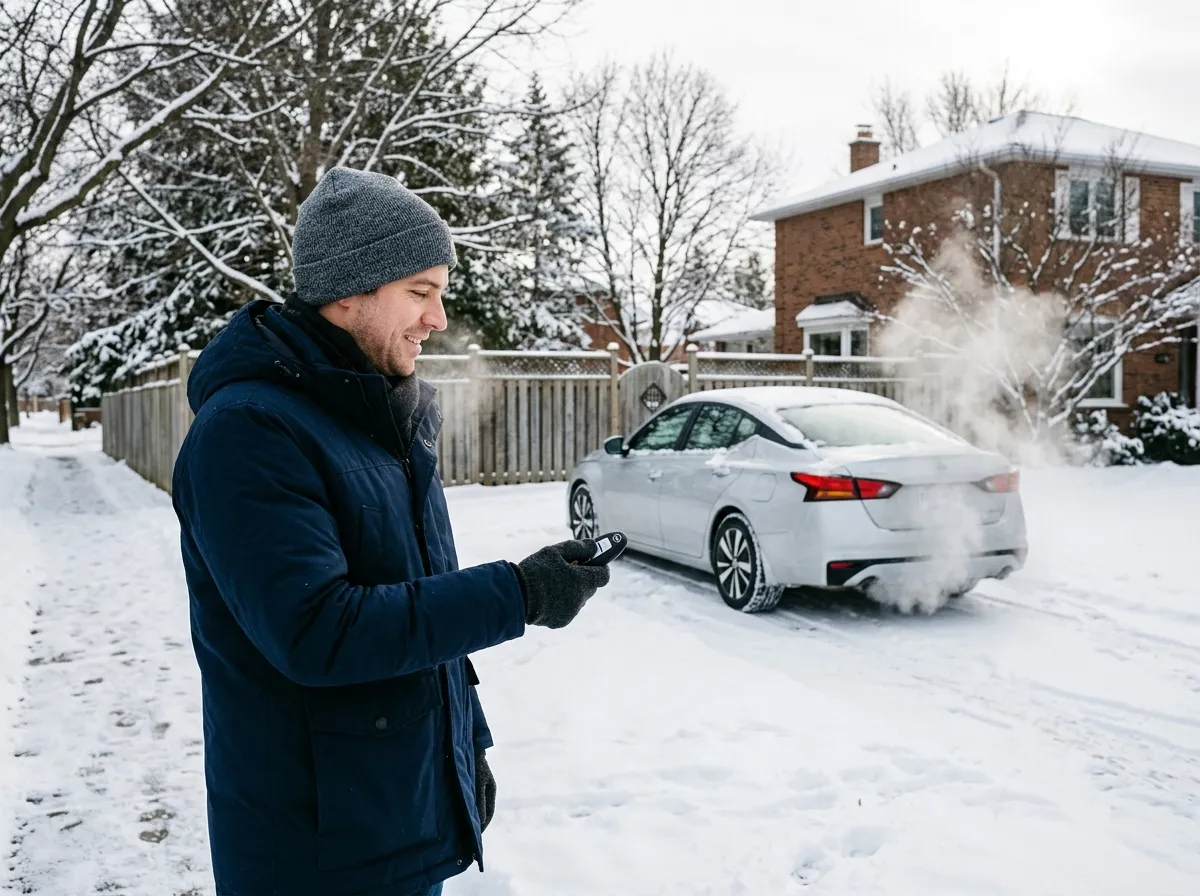
Few upgrades improve day-to-day driving comfort as immediately and consistently as a remote starter. The ability to start your vehicle from inside your home, warm the cabin in winter, cool it down in summer, and step into a car that is already at a comfortable temperature is one of those quality-of-life improvements that drivers who have it never want to live without.
Remote starter technology has evolved considerably over the last several years. What was once a basic convenience feature for cold climates has grown into a sophisticated category that now includes smartphone app control, two-way confirmation, GPS vehicle tracking, integrated security features, and compatibility with a far wider range of modern vehicles — including many newer models with push-button ignitions and keyless entry systems.
Demand has followed that evolution. Whether you drive in a climate that delivers punishing winters, blistering summers, or both, a remote starter addresses comfort on both ends of the temperature spectrum. And with professional installation available through auto electronics specialists, the process is far smoother and more reliable than it was even five years ago. If you have been considering adding this upgrade to your vehicle, this guide covers everything you need to make a confident, informed choice in 2026.
Understanding How Remote Starters Work
A remote starter is an aftermarket or OEM electronic device that allows a vehicle’s engine to be started without the driver physically being in the car or turning the ignition key. When the user sends a start command — by pressing a button on a dedicated key fob or through a smartphone app — the system sends a signal to a control module wired into the vehicle’s ignition circuit, which replicates the sequence of electrical events that normally occur when a key is turned, or a push-button is pressed.
What happens when you press start
The remote starter module checks a series of safety conditions before allowing the engine to start. These typically include confirming that the gear selector is in Park, that the hood is closed, and that no doors are open. Only when those conditions are satisfied does the system proceed to crank the engine. Once running, the vehicle idles and the climate control system operates on its last-used settings — meaning a cabin that was left with heat on will warm up, and one left with air conditioning on will cool down.
How the engine shuts off safely
Remote-started engines are designed to shut down automatically if anyone attempts to drive away without inserting the key or pressing the brake pedal in a push-to-start vehicle. This critical safety feature means a remotely started car cannot be driven away without the correct key — the engine immediately shuts off when the brake is depressed unless the proper authentication step is completed. This protects against theft and unintended movement.
One-way vs. two-way systems
Entry-level remote starters use one-way communication — the fob sends the start command, but you receive no confirmation that it worked. Two-way systems add a response signal back to the fob or smartphone, confirming that the engine started successfully. If you are starting your car from inside a building where you cannot see or hear it, the two-way confirmation removes the guesswork entirely and is strongly worth the modest additional cost.
Compatibility: What You Need to Check Before Buying
Not every vehicle is a straightforward candidate for remote starter installation, and compatibility is the single most important factor to research before committing to any system. Getting this step right saves significant time, money, and frustration.
Automatic vs. manual transmission
Remote starters work reliably and safely in automatic transmission vehicles. Manual transmission vehicles are a different matter. As Consumer Reports notes in its remote starter guide, installation on a manual transmission car carries real safety risks because the system cannot reliably detect whether the car was left in gear. Many reputable installation shops decline to fit remote starters to manual transmission vehicles for liability reasons. If your vehicle has a manual gearbox, discuss the options carefully with your installer before proceeding.
Push-to-start and keyless ignition systems
Vehicles with push-button ignitions and proximity key systems require a bypass module in addition to the remote starter itself. This module communicates with the vehicle’s immobiliser system, presenting the correct transponder signal to allow the engine to start without the physical key being present. Modern bypass modules from brands such as Fortin and iDatalink handle this function reliably, but they do add cost and complexity to the installation, which is one more reason professional fitting is strongly recommended over DIY.
Factory remote start integration
Many vehicles built since 2016 arrived from the factory with remote start hardware already installed but locked behind a telematics subscription — systems like Toyota’s Connected Services, GM’s OnStar, or Ford’s FordPass. In those cases, activating the factory system through the relevant app may be all that is needed, avoiding aftermarket installation entirely. Your installer can confirm whether this applies to your specific vehicle and trim level. If you already have a compatible setup, our car electronics team can advise on the best route for your make and model.
Diesel engines
Diesel-powered vehicles require remote starters with glow plug wait logic — the system must allow the glow plugs to reach operating temperature before cranking the engine, just as a driver would when starting manually. Not all aftermarket systems include this logic, so diesel owners need to specifically confirm compatibility when shopping.
Key Features to Compare When Choosing a System
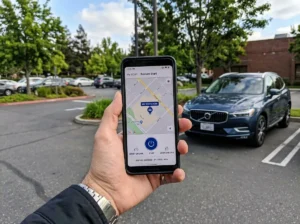
Once you have confirmed your vehicle is a suitable candidate, the next decision is which system to choose. The remote starter market spans a wide range of price points and feature sets, and understanding what actually matters for your use case will help you avoid paying for features you do not need — or missing the ones you will wish you had.
Range
Basic one-way systems typically operate over a range of 300 to 500 metres — adequate for starting a car parked in a driveway or a small car park. Extended-range systems push this to 1 kilometre or beyond. Smartphone app-based systems remove the range constraint entirely, allowing you to start your vehicle from any location with a mobile data connection — useful if you work in a multi-storey car park or want to pre-condition your vehicle before a long commute.
Runtime and auto-shutoff
Most remote starter systems are set to run the engine for a defined period — commonly 10 to 20 minutes — before automatically shutting down if the driver does not enter the vehicle. This prevents excessive idling, reduces fuel consumption, and is an important safety consideration for enclosed spaces. Adjustable runtime settings allow you to customise this to your preference.
Climate control integration
Higher-end systems can integrate with your vehicle’s climate control to set a specific target temperature before you arrive, rather than simply running on whatever setting was last active. Paired with heated or cooled seat activation — a feature available on vehicles with those options — this creates a genuinely luxurious pre-conditioning experience. If your vehicle already has seat comfort upgrades installed, confirming that your remote starter can activate them adds real value to the investment.
Security integration
Many mid-range and premium remote starter units include or can be paired with a full vehicle security system, adding features such as a dual-stage shock sensor, motion detection, starter-kill relay, valet mode, and passive arming. These additions provide meaningful theft deterrence beyond the basic anti-theft behaviour built into the remote starter itself. The remote starter systems installed by ASC include a dual-stage shock sensor, a dedicated trunk release output, a starter-kill relay, and ignition-controlled door locks as part of the standard package — a level of integration that goes well beyond entry-level options on the market.
Smartphone app control
App-based control via platforms such as DroneMobile or Compustar Connect adds GPS vehicle tracking, start/stop/lock/unlock from anywhere with a data connection, real-time notifications when the car is started or a door is opened, and — on compatible systems — integration with smart home platforms. For buyers who regularly travel or park in large facilities, app control is a practical upgrade that pays for itself quickly in convenience.
Safety Considerations Every Buyer Should Understand
Remote starters are among the more safety-sensitive aftermarket electronics installations because they interface directly with the vehicle’s ignition and starting systems. Approaching this correctly from the start avoids both safety risks and vehicle damage.
Carbon monoxide and enclosed spaces
A remotely started engine running in an attached garage poses a carbon monoxide risk, even with the garage door open. The vehicle should always be positioned so that exhaust can disperse safely before activating the remote start. Never use a remote starter to warm up a vehicle in a fully enclosed or poorly ventilated space.
Warranty implications
A professionally installed remote starter from a reputable brand, fitted by a certified technician, should not void your vehicle’s factory warranty. Damage caused by a poorly installed system — wiring faults, blown fuses, or electrical interference with other systems — is a different matter. This is another strong argument for professional installation over self-install kits purchased online. Using a specialist auto electronics shop removes warranty ambiguity and ensures the work is backed by its own installation guarantee.
Key fob security
As with any wireless device, there is a small risk of unintentional activation if the start button is accidentally pressed — for example, inside a bag or jacket pocket. Quality systems address this by using button sequences that require two or three presses to initiate, rather than a single accidental press. Confirming that your chosen system includes this accidental-start prevention is worthwhile, particularly if the vehicle is parked close to a structure or other vehicles.
Image 3 here
Professional Installation: Why It Matters More Than You Think
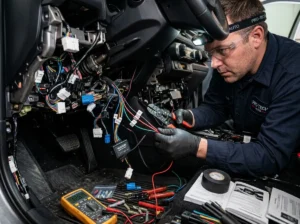
The remote starter market is flooded with budget self-install kits, and the temptation to save on labour costs is understandable. The reality, however, is that modern vehicle electrical architecture is significantly more complex than it was a decade ago. Canbus systems, encrypted immobilisers, integrated body control modules, and advanced driver assistance systems all create interdependencies that a poorly wired aftermarket device can disrupt.
What a professional installation includes
A qualified installer will begin by identifying the exact wiring configuration for your specific vehicle — year, make, model, trim, and transmission — using up-to-date vehicle-specific wiring data. They will source the correct bypass module for your immobiliser system, connect all circuits without splicing or damaging factory harnesses, program the system to your vehicle’s protocol, and test every function before returning the vehicle. The result is an installation that works seamlessly, leaves no visible evidence of modification, and does not create interference with other electronics.
What can go wrong with DIY
Common problems with self-installed remote starters include incorrect bypass module selection, causing the immobiliser to prevent starting, wiring errors that trigger fault codes or disable unrelated systems, and connections that fail intermittently in cold or damp conditions, which is particularly ironic given that cold-weather convenience is one of the primary reasons people install remote starters in the first place.
Our remote starter installation service at ASC covers the full process from compatibility assessment through to programming and testing, with systems that include the dual-stage shock sensor, trunk release, starter-kill relay, and ignition-controlled door locks as standard. If you are also considering other electronics upgrades at the same time — such as a navigation system, reverse sensors, or power window and lock upgrades — combining them in a single installation visit is both more efficient and more cost-effective.
Remote starters represent one of the best value-for-money upgrades in automotive electronics because the benefit is felt every single day, in every season. Choosing the right system and having it fitted correctly by experienced professionals is the difference between an upgrade you rely on for years and one that creates more problems than it solves. If you are ready to take the next step, browse all of ASC’s electronics services or get in touch to discuss which system suits your vehicle and your needs.