Why Textured Wraps Are Changing What Vinyl Can Do
For most of the history of vinyl vehicle wraps, the conversation has been about color. Gloss, matte, satin — the primary variable was always finish level, and the primary canvas was always a flat, smooth surface. That is still very much part of the story in 2026, but it is no longer the whole story. A fast-growing category of vinyl films has fundamentally changed what wraps can achieve, and it does so by adding a dimension that flat finishes simply cannot: texture.
Textured vinyl wraps are films engineered to replicate the appearance and tactile quality of real-world materials — carbon fiber weaves, brushed aluminum panels, leather grain, honeycomb patterns, and more. Rather than producing a smooth surface that reads as a color, these films produce a surface that reads as a material. The result is a visual depth and physical presence that changes how a vehicle looks under different lighting conditions, at different viewing distances, and from different angles.
This is a meaningfully different experience from a standard wrap, and it opens up a range of styling directions — from high-performance motorsport aesthetics to industrial luxury to warm, tactile cabin environments — that color-only vinyl simply cannot access. Whether applied to an exterior hood, a roof panel, door pillars, or interior trim surfaces, textured wraps are one of the most exciting tools currently available in the automotive customization world.
Carbon Fiber Wraps: The Motorsport Classic
Carbon fiber is one of the most loaded visual signals in automotive design. The material itself — a woven composite of carbon strands locked in epoxy resin — is genuinely extraordinary: stronger than steel at a fraction of the weight, and visually complex in a way that catches and holds attention. Its association with Formula 1, Le Mans prototype racing, and the most extreme road cars in the world gives it an instant performance credibility that no other finish can replicate.
Real carbon fiber components are prohibitively expensive for most vehicle owners. A carbon fiber hood for a performance car can cost several thousand dollars. A full carbon fiber interior refresh across door panels, dashboard inserts, and trim pieces would cost many times that. Carbon fiber vinyl wrap delivers the same visual language at a fraction of the cost, with the added benefit of protecting the original surface beneath.
Understanding the different carbon fiber wrap grades
Not all carbon fiber vinyl wraps are equal, and the grade chosen makes a significant difference to the realism and visual impact of the finished result.
2D carbon fiber is the flattest option — a printed pattern without meaningful surface relief. It reads as carbon fiber from a distance but lacks the depth and light-interplay of the real material. It is the most affordable grade and works well for interior accent pieces where the surface is rarely viewed at close range.
3D carbon fiber introduces a subtle raised texture that creates genuine shadow and highlight variation as light moves across the surface. This grade is significantly more convincing than 2D and is the most widely used option for exterior panels, roof sections, and mirror caps.
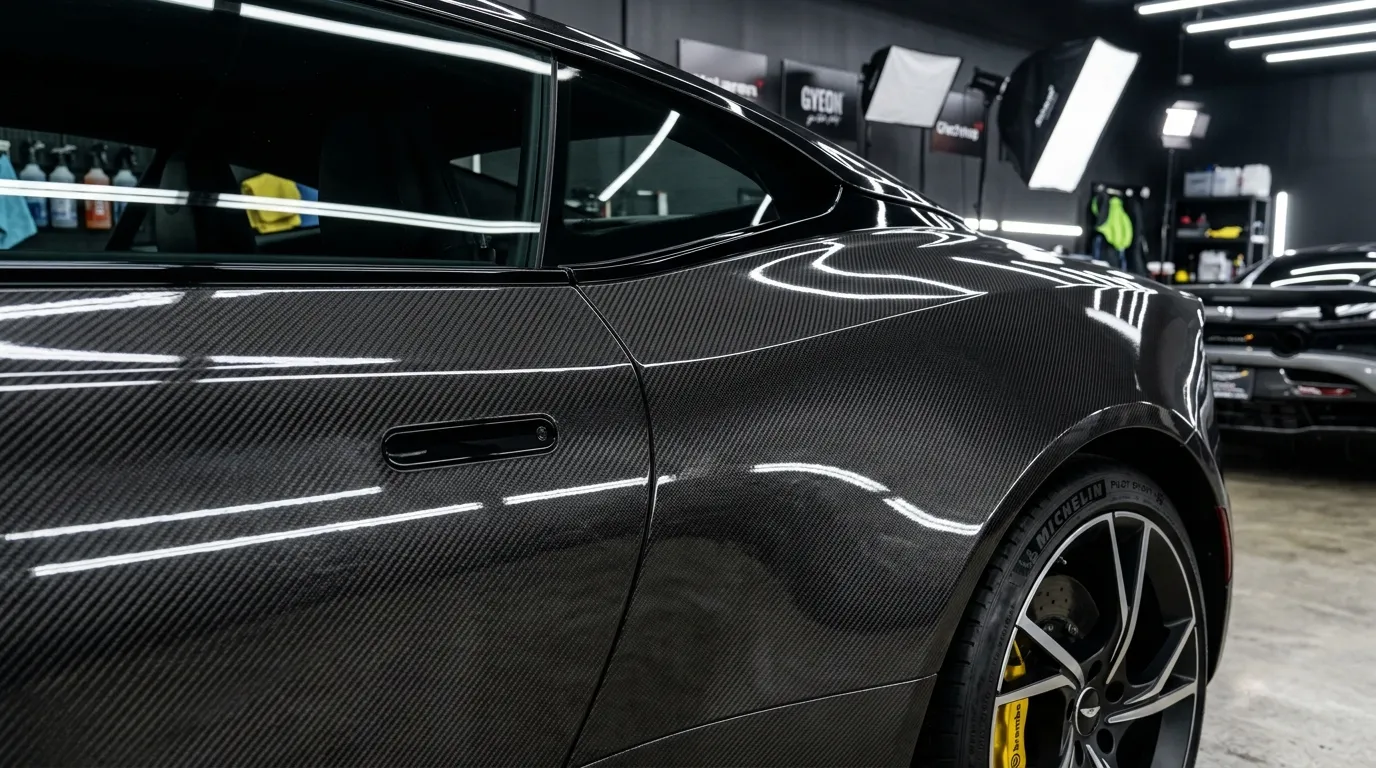
4D and 5D carbon fiber represent the highest grades of textured wrap currently available. The surface relief is more pronounced, the weave pattern is sharper, and the light reflection behavior more closely mimics the clear-coated carbon fiber found on genuine performance components. Under direct sunlight or studio lighting, a quality 5D carbon fiber wrap is genuinely difficult to distinguish from the real material at normal viewing distances. For exterior hoods, full roof panels, and any surface where realism is the priority, these grades are the right choice.
Where carbon fiber wraps work best
Carbon fiber is most impactful on surfaces that receive direct light and are viewed from close range. Hoods, roofs, door mirror housings, spoilers, splitters, and interior dashboard inserts are all natural applications. It pairs especially well with dark body colors — gloss or satin black, deep navy, and gunmetal — where the contrast between the body finish and the carbon fiber texture creates a visual layering that reads as purposefully designed rather than applied. For drivers who have already explored the blacked-out aesthetic, our guide to complete blacking-out services and matte black transformations covers how carbon fiber elements integrate naturally into that overall approach.
Brushed Metal Wraps: Industrial Elegance
Where carbon fiber signals performance and motorsport, brushed metal vinyl wrap signals something different — a kind of restrained, industrial precision that reads as modern luxury rather than outright aggression. The brushed finish — whether presented as aluminum, titanium, steel, or gold — mimics the appearance of a metal panel that has been uniformly sanded in one direction, creating fine parallel lines that catch and diffuse light in a way that is simultaneously subtle and visually rich.
The visual character of brushed metal
The key quality of brushed metal finish is directionality. The fine grain lines run consistently across the surface, and as the viewing angle or light source shifts, different portions of the panel pick up or release highlights. This creates a dynamic, almost alive quality that flat metallic vinyl — which simply reflects light uniformly — does not possess. On a curved body panel, the brushed grain curves with the surface, accentuating the panel’s shape in a way that amplifies the vehicle’s body lines rather than obscuring them.
Color options within the brushed metal category
Brushed metal wraps are available across a surprisingly wide range of base tones. Brushed aluminum is the most versatile — a cool, neutral silver that works with almost any body color. Brushed titanium shifts slightly darker and warmer, with a more premium feel. Brushed steel reads as more industrial and assertive. And brushed gold or rose gold — while reserved for specific aesthetic contexts — delivers a warm, distinctive finish that photographs exceptionally well and is increasingly popular on luxury SUVs and executive sedans.
Exterior and interior applications
Brushed metal is one of the most versatile textured wraps in terms of application range. On the exterior, it works particularly well on hoods, roofs, door pillars, and partial panel sections used as contrasting accents. In the interior, it is an outstanding choice for dashboard trim inserts, center console panels, door pull surrounds, and gear selector surrounds — surfaces that are frequently touched and benefit from the material quality that brushed metal communicates. Combined with a leather or Alcantara interior, a brushed metal dashboard trim creates an interior environment that feels genuinely premium rather than simply upgraded. Our trim and upholstery service regularly integrates brushed metal vinyl trim work alongside full interior refreshes for exactly this reason.
Leather-Texture Wraps: Warmth and Tactility for Interiors
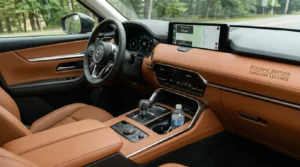
Leather-texture vinyl occupies a distinct position in the textured wrap world because its primary application is interior rather than exterior. These films are engineered to replicate the grain, depth, and surface character of real leather — from tight-grained nappa to more pronounced pebble textures — and they deliver a warmth and material quality to interior surfaces that standard vinyl simply cannot match.
Where leather-texture vinyl makes the most impact
The most effective applications for leather-texture wrap are large, flat, or gently curved interior surfaces that are frequently seen but not always practical to re-upholster in genuine leather. Dashboard top surfaces, door panel sections above the upholstered trim line, headliner sections, parcel shelves, and glove box facings are all excellent candidates. On older vehicles where the original dashboard has faded, cracked, or discolored, a leather-texture vinyl wrap is one of the most dramatic and cost-effective interior refreshes available.
Complementing genuine leather upholstery
Leather-texture wrap does not replace genuine leather upholstery on seats and padded surfaces — it complements it. A vehicle with custom leather seat upholstery and matching leather-texture vinyl on the hard interior surfaces presents a cohesive, high-end interior environment where every surface appears to belong to the same material language. For those building out a complete interior transformation, our custom leather interior service works seamlessly alongside vinyl trim work to produce exactly this kind of unified result. Browsing the available leather catalogues first helps identify which color and grain combination will guide both the upholstery and the trim vinyl selection.
Installation: Why Textured Wraps Require More Expertise
Textured vinyl wraps are not installed using the same techniques as standard flat films, and this distinction matters enormously for the quality of the finished result. As Elite Wrappers’ guide to textured vinyl installation explains, three specific challenges make these films more demanding: texture alignment, stretching behavior, and heat sensitivity.
Texture alignment
On a carbon fiber or brushed metal wrap, the pattern runs in a specific direction. For the finished result to look intentional and professional, that direction must be consistent across all panels of the vehicle — the grain lines on the hood must align with those on the roof, which must align with those on the mirror caps. Misalignment across panel breaks is immediately visible and immediately signals an amateur installation. Achieving consistent alignment across complex, multi-panel applications requires careful planning before a single piece of film is cut.
Stretching and pattern distortion
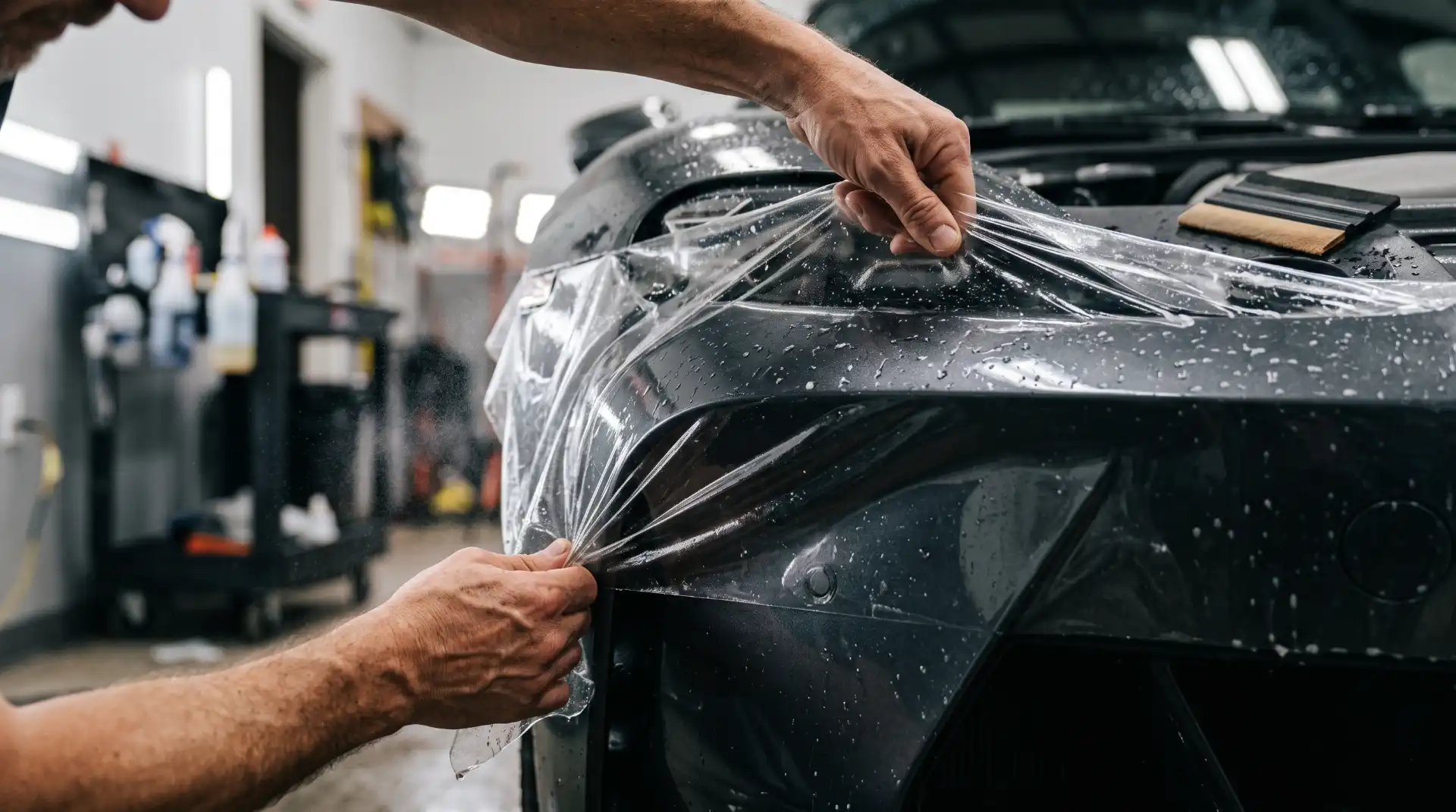
When any vinyl is stretched around curves, compound surfaces, or recessed areas, it deforms. With a flat-color wrap, that deformation is often invisible. With a textured wrap, stretching distorts the pattern — carbon fiber weaves become elongated, brushed lines converge — and the distortion is clearly visible under light. Experienced installers use relief cuts, overlapping section joins at natural panel breaks, and controlled heat application to conform textured films around curves without introducing visible distortion. This is one of the primary reasons professional installation is strongly recommended over DIY for textured wrap work.
Heat application
Heat is routinely used in vinyl installation to improve conformability. With textured wraps, heat application must be carefully controlled — too much heat collapses the surface texture, permanently altering the finish. Professional installers work with lower heat settings and more deliberate application techniques than standard flat-film installations require.
Caring for Your Textured Wrap
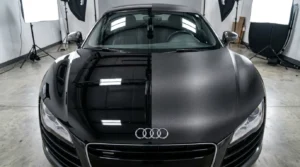
Textured wrap surfaces require slightly more considered care than flat vinyl, primarily because their surface relief can trap fine particles that a smooth surface would simply shed.
Washing technique
Hand washing with a pH-neutral automotive shampoo and a soft microfiber mitt is the recommended approach for textured wrap surfaces. The mitt’s fibers reach into the surface texture to lift contaminants without abrading the raised pattern. Avoid stiff brushes or abrasive cloths, which can flatten or scratch the texture over repeated use. Rinse thoroughly to clear any shampoo residue from the textured surface.
Protection and longevity
A vinyl-safe ceramic coating or spray sealant applied over a textured wrap adds a hydrophobic layer that helps water and dirt bead off rather than settling into the surface texture. This protection is particularly worth considering for exterior textured panels — hoods and roofs especially — that receive the most UV and environmental exposure. Premium cast vinyl textured films from brands such as 3M, Avery Dennison, and KPMF carry manufacturers’ outdoor durability ratings of five to seven years when properly maintained, giving you long-term confidence in your investment.
Whether you are drawn to the performance authority of carbon fiber, the refined precision of brushed metal, or the warm material depth of leather texture, these finishes give any vehicle a dimension that flat vinyl simply cannot reach. To explore which textured wrap options are right for your vehicle and how they integrate with your broader styling plans, get in touch with the ASC styling team — or take a look at how textured elements combine with other customization approaches in our guide to the benefits of professional vehicle wrapping.