Why Van Owners Are Prioritizing Window Tinting in 2026
Vans occupy a unique position in the automotive world. Whether used as daily commercial workhorses, family passenger vehicles, camper conversions, mobile service units, or personal transportation, they carry significant value — both in terms of the vehicle itself and whatever is inside it. That combination of large glass area, high-value contents, and regular parking in public spaces makes window tinting one of the most practically impactful upgrades a van owner can make.
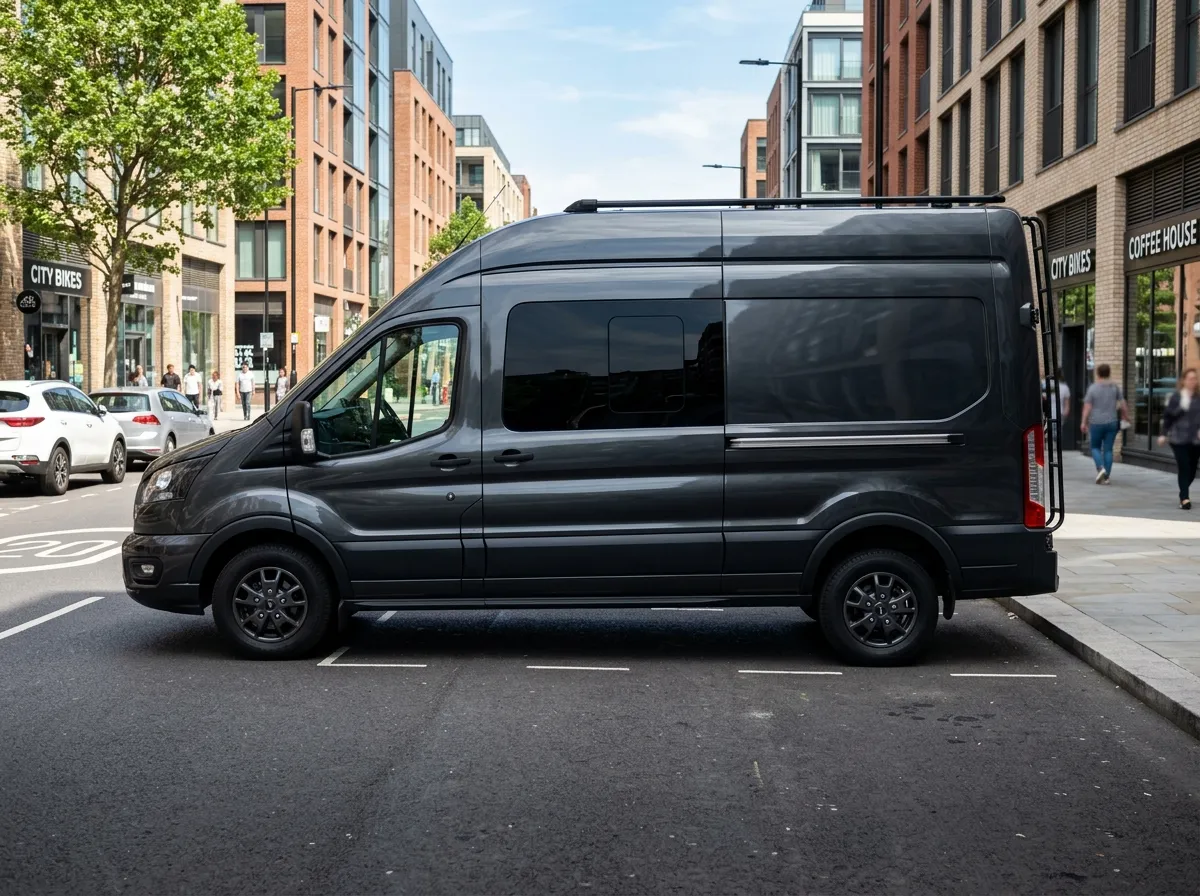
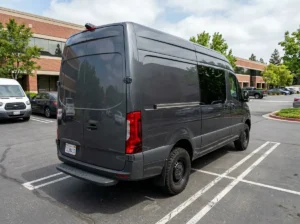
The case for tinting a van is not the same as the case for tinting a sedan. A sedan’s rear windows cover a relatively modest area. A full-size cargo or passenger van — a Ford Transit, Ram ProMaster, Mercedes-Benz Sprinter, or Chevrolet Express — has large, tall side windows and a substantial rear glass area that expose the entire cabin to outside view. What is visible inside a van, who can see it, and how much heat enters the cabin through that glass are all meaningfully different from a standard passenger car scenario. Window tinting addresses all three concerns simultaneously, and it does so permanently rather than requiring ongoing effort or compromise.
In 2026, the quality of van-specific window tinting has never been better. Film technology has advanced to the point where ceramic and nano-ceramic films block infrared radiation and UV energy at a level that makes a measurable difference to cabin temperature — critical for cargo that must be kept cool and for passengers spending extended time in the vehicle. If you are a van owner who has been considering this upgrade, this guide covers everything you need to make the right decision: film types, key benefits, legal considerations, and why professional installation on a van specifically is more important than on any other vehicle type.
Why Van Window Tinting Is a Different Conversation
Before exploring the specific benefits and options, it is worth understanding why van window tinting deserves its own dedicated consideration rather than simply applying car tinting principles to a larger vehicle.
Greater glass area and heat exposure
A full-size van has significantly more window surface area than a standard passenger car. More glass means more solar energy entering the cabin — both infrared heat and ultraviolet radiation. On a hot summer day, an untinted van interior can reach temperatures that damage temperature-sensitive cargo, create an uncomfortable working environment for tradespeople, and make the cabin genuinely unsafe for passengers — particularly children or pets — left inside even briefly. The larger the glass area, the more dramatic the improvement from quality heat-rejecting window film.
Higher privacy and security requirements
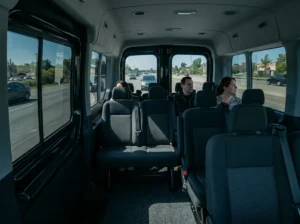
Cargo vans routinely carry tools, equipment, electronics, product inventory, and other high-value items. A clear view through untinted rear and side windows is effectively an invitation for opportunistic theft — potential thieves can quickly assess the contents of a parked van before deciding whether to break in. Passenger vans — whether used for shuttle services, family transport, or accessible mobility — carry people who have a reasonable expectation of privacy and protection from outside observation. Window tinting addresses both categories of need with the same installation.
Professional appearance for commercial operations
For business owners operating branded or commercial vans, the vehicle’s appearance is a direct reflection of the business. A van with deep, professionally applied window tinting looks significantly more polished and credible than one with untreated factory clear glass. The dark glass creates a clean, uniform exterior aesthetic that reads as intentional and well-maintained — reinforcing the professional image that commercial operators work hard to project in every other aspect of their business.
The Key Benefits of Van Window Tinting
Understanding the specific benefits that window tinting delivers for van owners makes the investment case straightforward. These advantages work together rather than independently — every benefit listed below is active simultaneously, every day, from the moment the installation is complete.
Privacy — genuine, all-day privacy
Properly applied dark solar privacy glass makes it functionally impossible to see inside the van from normal viewing distances in daylight conditions. This is the most immediate and visible benefit for most van owners. Tools and equipment left in a cargo van overnight are invisible to passers-by. Passengers in a shuttle van are not visible to people outside. Mobile workshop operators can work inside their van without being observed. The privacy benefit operates passively — there is nothing to activate or adjust. It is simply present, all the time, as a result of the film.
Security — deterrence and glass integrity
Window tinting contributes to security in two distinct ways. First, by eliminating the visual information that enables opportunistic theft — a potential thief who cannot see inside a van cannot make a quick judgment about whether it is worth breaking into. Second, quality window films hold shattered glass together after an impact rather than allowing it to scatter. In the event of a break-in attempt or an accident, a tinted window that is struck holds its shape significantly longer than untreated glass, buying time and reducing the risk of injury from flying glass fragments. As Kelley Blue Book’s window tinting guide notes, the film adds a meaningful layer of structural integrity to automotive glass that extends well beyond the privacy benefit most owners initially seek.
Heat rejection and cabin comfort
Modern ceramic and nano-ceramic window films reject a substantial portion of solar infrared energy — the component of sunlight primarily responsible for heat buildup inside a vehicle. For a large van with extensive glass area, the difference between an untinted and a ceramic-tinted cabin on a hot day is dramatic. Cargo that requires ambient temperature control benefits directly. Passengers experience a genuinely more comfortable environment without relying exclusively on air conditioning. And for tradespeople who spend time inside their van throughout the day, the reduction in cabin temperature is a real improvement in working conditions rather than a cosmetic enhancement.
UV protection for occupants and interior
Quality window films block up to 99% of UV radiation — the component of sunlight that causes skin damage with prolonged exposure and causes interior surfaces to fade, crack, and degrade over time. For passenger van operators who spend hours per day behind the wheel, this UV protection is a genuine health consideration. For cargo operators whose van interiors represent a working environment, protecting upholstery, dashboards, and any UV-sensitive cargo from premature degradation extends the useful life of both the vehicle and its contents. Our leather interior service pairs naturally with window tinting for this reason — tinted glass extends the life of premium leather upholstery by reducing its UV exposure significantly.
Glare reduction for driver safety
Vans have larger windshield and side window areas than most vehicles, and their higher seating position means drivers are often more directly exposed to low sun angles during morning and evening commutes. Quality window film on side windows and rear glass reduces the reflected and ambient glare that enters the driver’s field of view from multiple angles — improving visibility, reducing eye strain on long drives, and contributing to safer operation of a vehicle that is already larger and less maneuverable than a standard car.
The Right Film for Your Van
Not all window film performs equally, and for a van — where the glass area is large and the use case is demanding — selecting the right film category matters significantly more than it does for a standard passenger car.
Dyed film
Dyed film is the most basic and affordable option. It provides privacy and a dark appearance but delivers limited heat rejection and minimal UV protection beyond basic levels. Dyed films are also prone to fading and color shift over time, particularly on surfaces with high UV exposure — which, given a van’s large glass area, is an important practical consideration. For van applications where longevity, heat rejection, and UV protection are genuine priorities, dyed film is rarely the appropriate choice.
Carbon film
Carbon window film is a significant step up in performance. It does not fade or shift color over time the way dyed film does, delivers meaningful heat rejection through infrared blocking, and provides solid UV protection across its service life. Carbon film is a practical and cost-effective choice for van owners who want genuine performance benefits without the premium price of ceramic film.
Ceramic and nano-ceramic film
Ceramic film is the premium choice and the most appropriate option for vans where heat rejection, UV protection, and long-term performance are the priorities. Unlike metallic films, ceramic film does not interfere with electronic devices — GPS, mobile phones, fleet management systems, or any other technology operating inside or outside the van. Ceramic films reject the highest proportion of infrared energy, deliver up to 99% UV blocking, maintain optical clarity, and carry the longest warranties — typically a lifetime guarantee against bubbling, peeling, and color change. For vans used commercially, the investment in ceramic film is justified by its durability and by the comfort and protection benefits it delivers over a significantly longer service life. Our van windows service includes the installation of dark solar privacy glass in most vans — the same solar-control glass technology that delivers these heat and UV benefits alongside the visual privacy that van owners most commonly seek.
Legal Considerations for Van Window Tinting in Canada
Window tinting laws in Canada are regulated provincially, and the rules for vans — particularly cargo vans — are generally more permissive than those for standard passenger cars. Understanding where your vehicle sits within these regulations before installation is important, and a professional installer will always work within the legal limits for your jurisdiction.
Cargo vans vs. passenger vans
Most Canadian provinces distinguish between commercial cargo vans and passenger-carrying vehicles when applying window tint regulations. Cargo vans — vehicles not designed to carry passengers in the load area — are typically permitted to have significantly darker tint on rear and side windows behind the driver than passenger vehicles, since those windows do not serve a passenger visibility function. Passenger vans and multipurpose vehicles are subject to the same provincial VLT (Visible Light Transmission) requirements as other passenger vehicles on side and rear windows.
Front windows always have stricter limits
Regardless of vehicle type, provincial regulations universally impose stricter VLT requirements on front side windows — the windows immediately adjacent to the driver and front passenger — because these directly affect the driver’s ability to see clearly in all conditions. A professional installer will not apply film to front side windows that brings them below the legal VLT threshold for your province, and will advise you clearly on what is permissible for each window position on your specific van configuration. For a full overview of how tinting regulations work and what the professional installation process involves, our detailed guide on DIY vs. professional window tinting covers the compliance considerations that matter most for vehicle owners in Canada.
Professional Installation vs. DIY for Vans
The argument for professional installation over DIY is stronger for vans than for almost any other vehicle type, for reasons that go beyond the general case for professional tinting.
The challenge of large, complex glass panels
Van side windows and rear glass panels are large, often curved or compound-curved, and in some configurations frameless or nearly so. Applying window film to these surfaces without bubbles, creases, contamination, or edge lifting requires both the right tools and significant hands-on experience with van-specific glass geometries. A flawed installation on a large panel is highly visible, difficult to correct without removing the film entirely, and wastes both the film and the labor invested.
Precision cutting for a clean result
Professional installers use computerized plotters to pre-cut film panels precisely to the dimensions of each window on your specific van model. This precision eliminates the gaps and overlaps that result from hand-cutting film on the vehicle, produces clean edges that sit correctly at window seals and trim lines, and results in an installation that is effectively indistinguishable from factory-fitted dark glass when done correctly. ASC installs dark solar privacy glass across most van models — the same clean, factory-quality result regardless of the van’s make or configuration.
Warranty coverage
Professional installations from certified shops come with workmanship warranties in addition to the film manufacturer’s product warranty. If any issue — bubbling, lifting, discoloration — develops within the warranty period, it is corrected at no cost. DIY installations carry no such protection, and a failed self-install can leave a van with compromised privacy glass that requires professional removal and reinstallation — ultimately costing more than a professional installation would have from the start.
For van owners who also want to address interior comfort alongside window tinting, our seat comfort upgrades — including heated and ventilated seat options — pair naturally with tinting as part of a broader cabin improvement project. And for operators planning a more comprehensive vehicle transformation that includes electronics such as fleet management systems, backup cameras, or in-vehicle entertainment, our full electronics service range covers the complete scope of what is possible. To discuss van window tinting options for your specific vehicle and use case, visit our van windows service page or contact the ASC team directly to arrange a consultation.