The Factory Infotainment Problem Nobody Told You About
When you buy a new car, the infotainment system looks impressive in the showroom. The screen is responsive, the interface is fresh, and everything feels connected and current. Fast forward three years, and a different reality often sets in. Software updates have slowed or stopped entirely. The maps in the built-in navigation are out of date and require a paid subscription to refresh. The interface that felt modern at purchase now looks a generation behind what your phone can do. And features you have come to rely on — wireless Apple CarPlay, seamless Android Auto, real-time streaming audio — either work inconsistently, require workarounds, or simply are not supported.
This is not an edge case. It is one of the most consistent complaints among vehicle owners across every mainstream brand, and it is driving a significant and fast-growing movement toward OEM infotainment replacement in 2026. Drivers are discovering that a professionally installed aftermarket head unit does not just fix what the factory system lacks — it frequently delivers a dramatically better experience in every measurable category, at a fraction of the cost of buying a new car to get updated technology.
The trend has been sharpened by a series of manufacturer decisions that have frustrated loyal customers. Most notably, General Motors made headlines when it announced that its new electric vehicles would not support Apple CarPlay or Android Auto — a move that Edmunds called a major risk for GM, noting that it strips drivers of features they have come to consider essential. For GM owners — and for anyone else whose manufacturer has made decisions that prioritize the automaker’s ecosystem over the driver’s preferences — the aftermarket route is the most direct way to take back control of the in-car technology experience.
Why Factory Infotainment Systems Fall Short
To understand why OEM infotainment replacement is accelerating, it helps to understand the structural limitations that factory systems carry from the moment they leave the production line.
Development and manufacturing lead times
A vehicle’s infotainment system is designed and locked in years before the car reaches a dealership. By the time you drive it home, the technology inside is already several product cycles behind the current state of consumer electronics. This is not a quality failure — it is simply the reality of automotive development timelines. A smartphone is updated annually. A car model cycle runs four to seven years. The infotainment system sits uncomfortably in the middle of that tension, and it always loses.
Software update limitations
Unlike smartphones, which receive regular OS updates that improve performance and add features over time, most factory infotainment systems receive limited software support and age poorly. Map databases become stale. Voice recognition performance degrades relative to consumer expectations. Interface design that felt acceptable at launch looks dated within two or three years. And for vehicles more than five years old, manufacturer support for system updates has often ended entirely — leaving drivers with hardware that is perfectly functional but increasingly disconnected from their digital lives.
Subscription gating and data collection
A growing number of manufacturers are moving features that were once included as standard into subscription tiers. Navigation updates, remote access, real-time traffic, and even some connectivity features now require ongoing payment to unlock. Simultaneously, factory infotainment systems are designed to collect and transmit user data — driving behavior, location history, app usage — as part of the manufacturer’s commercial ecosystem. For drivers who value both value for money and privacy, these trends are meaningful incentives to replace the factory system entirely.
What a Quality Aftermarket Head Unit Delivers
The aftermarket head unit market in 2026 is mature, competitive, and genuinely impressive. Brands including Kenwood, JVC, Pioneer, and Sony produce double-DIN receivers that pack technology the factory system in most vehicles cannot match — at price points that make the upgrade economically straightforward.
Wireless Apple CarPlay and Android Auto
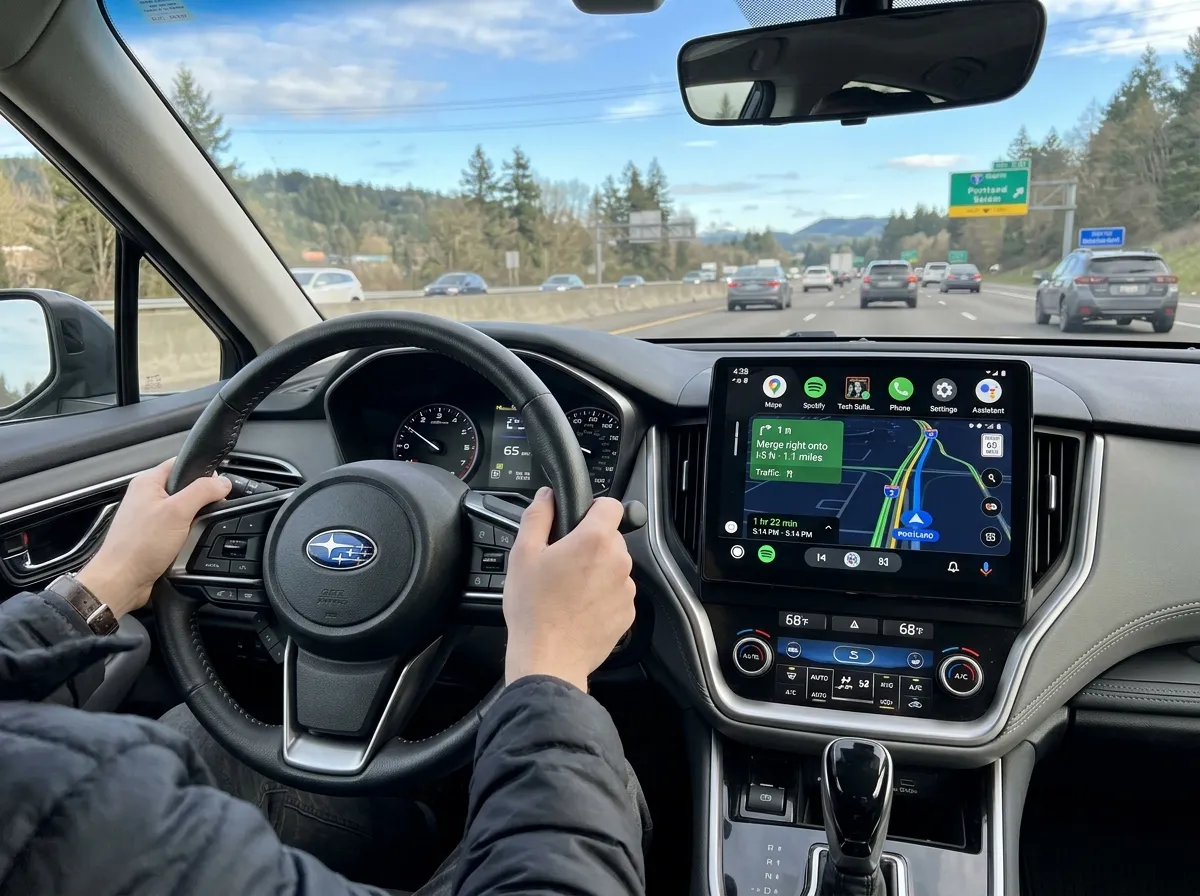
This is the headline feature for most drivers making the switch. CarPlay and Android Auto mirror your smartphone’s interface — navigation, music, messaging, calls — onto the head unit’s screen, using your phone’s processing power, your phone’s app updates, and your phone’s cellular connection for real-time data. This means the infotainment experience is always as current as your phone, regardless of how old the car is. Wireless versions eliminate the need for a cable connection, keeping the cabin tidy and making the handoff between phone and car seamless. For vehicles where the factory system never supported CarPlay or Android Auto — or where it only supported the wired version — a wireless-capable aftermarket head unit is a transformative upgrade that immediately modernizes the driving experience.
Superior audio performance
Factory audio systems are designed and priced to a budget, and the head unit’s internal amplifier and digital signal processing are typically the first compromises made during that budget optimization. Premium aftermarket head units from brands such as Kenwood’s eXcelon series include high-quality digital-to-analog converters, time alignment, parametric equalization, and signal processing capabilities that the factory unit simply does not possess. Even paired with stock speakers, a quality aftermarket head unit produces a noticeably more detailed and balanced sound. Paired with upgraded speakers or an external amplifier, the improvement is dramatic. Our navigation and head unit installation service includes Kenwood eXcelon and JVC in-dash units with built-in Bluetooth, fully installed with matching dash pieces — ensuring that the upgrade looks factory-fitted rather than grafted on.
Integrated Bluetooth and hands-free calling
Modern aftermarket head units include high-quality Bluetooth audio streaming and hands-free calling as standard, with voice recognition for safe operation while driving. For vehicles where the original system’s Bluetooth is unreliable, drops connections, or does not support audio streaming — a common complaint with units from the mid-2010s — a head unit replacement resolves these issues entirely rather than working around them. Our dedicated Bluetooth integration service covers vehicles where a full head unit replacement is not required or desired, but for most drivers, the head unit replacement delivers Bluetooth as part of a much broader technology upgrade rather than a standalone fix.
Backup camera and safety system integration
A double-DIN head unit with a touchscreen display is also the natural integration point for a backup camera — displaying the camera feed directly on the screen when reverse gear is engaged. Combined with our reverse sensor installation, this creates a comprehensive rear visibility system that surpasses what many factory configurations provide, particularly on older vehicles. The head unit screen can also serve as the display interface for dash camera footage, parking assistance overlays, and — on compatible vehicles — tire pressure monitoring system readouts.
Choosing the Right Head Unit for Your Vehicle
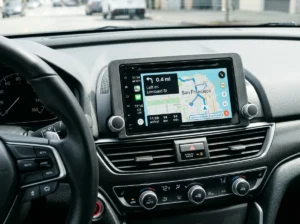
The aftermarket head unit market is broad, and matching the right unit to your vehicle requires consideration of several factors beyond simply choosing the largest screen available.
Single DIN vs. double DIN
DIN refers to the standardized opening size in a vehicle’s dashboard. A single DIN opening is approximately 50mm tall and 180mm wide — the original standard. A double DIN opening is twice the height and accommodates the larger touchscreen receivers that dominate the modern aftermarket market. Most vehicles produced from the late 1990s onward have double DIN openings or can be adapted to accept them using a dash kit, but confirming your vehicle’s dash configuration before purchasing is an essential first step.
Dash kits and integration harnesses
A quality head unit installation is not simply a matter of swapping one unit for another. Vehicle-specific dash kit panels ensure the new unit fills the dash opening with a factory-fit appearance rather than an obvious aftermarket gap or filler. Integration harnesses maintain connections to steering wheel audio controls, factory amplifiers, and other systems that would otherwise be disabled by a simple wire-for-wire swap. For vehicles with factory-active noise cancellation, lane keep assistance audio alerts, or other systems that route through the infotainment hardware, proper integration harnesses are essential to preserving full vehicle functionality after the upgrade.
Vehicle-specific navigation units
For owners of specific GM, Ford, Honda, Toyota, Subaru, and Scion vehicles who want a navigation upgrade that looks and feels like a factory option, vehicle-specific navigation units — including Audiovox and Advent factory-fit systems available through ASC — provide the closest possible integration with the original interior architecture. These units use the existing factory mounting points, climate control interfaces, and dash panels, delivering navigation and connectivity improvements without any visible indication of aftermarket modification.
Professional Installation: Why It Matters
The difference between a head unit installed by an experienced professional and one installed from a YouTube tutorial is immediately visible — and felt — every time you get in the car.
What a professional installation includes
A professional head unit installation begins with vehicle-specific wiring data, ensuring every circuit is connected correctly to the right factory wire rather than approximated from a generic color-code guide. The installer will source the correct dash kit and integration harness for your specific year, make, model, and trim level. The unit will be programmed, paired to your phone, and tested across all functions before the dash is reassembled. And the finished result will have every panel sitting flush, every feature working, and the new head unit looking as though it arrived from the factory that way.
Common problems with DIY installations
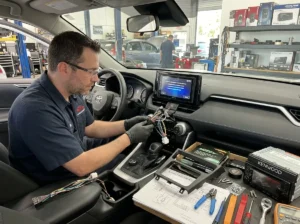
The most frequent issues with self-installed head units are steering wheel controls that stop working due to missing integration harness, factory amplifiers that go silent because the signal path was interrupted, error codes triggered in the vehicle’s body control module by incorrect wiring, and physical installation that looks unfinished because the correct dash kit was not used. These are not rare outcomes — they are the predictable result of treating a vehicle-specific installation as a generic electronics project.
At ASC, our electronics team handles the full scope of in-dash technology upgrades — from navigation and head unit replacements to remote starters and complete electronics packages for new and older vehicles alike. For a broader look at how technology is reshaping what is possible in today’s vehicles, our post on the latest technology in auto styling services covers the full landscape of innovation currently available through the aftermarket. And if you are planning multiple electronics upgrades, combining them in a single installation visit is the most efficient way to get everything done right. Browse our full range of car electronics services to see everything ASC offers and start planning your upgrade today.