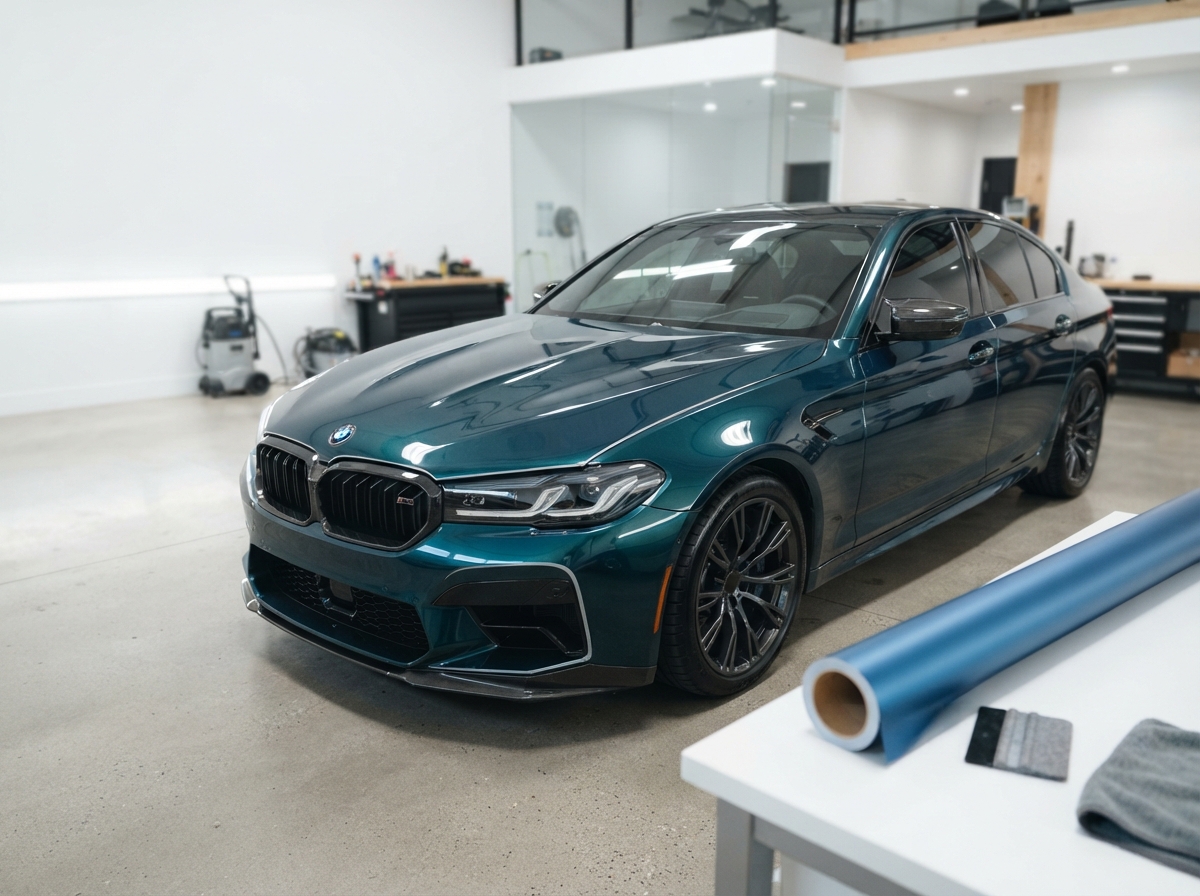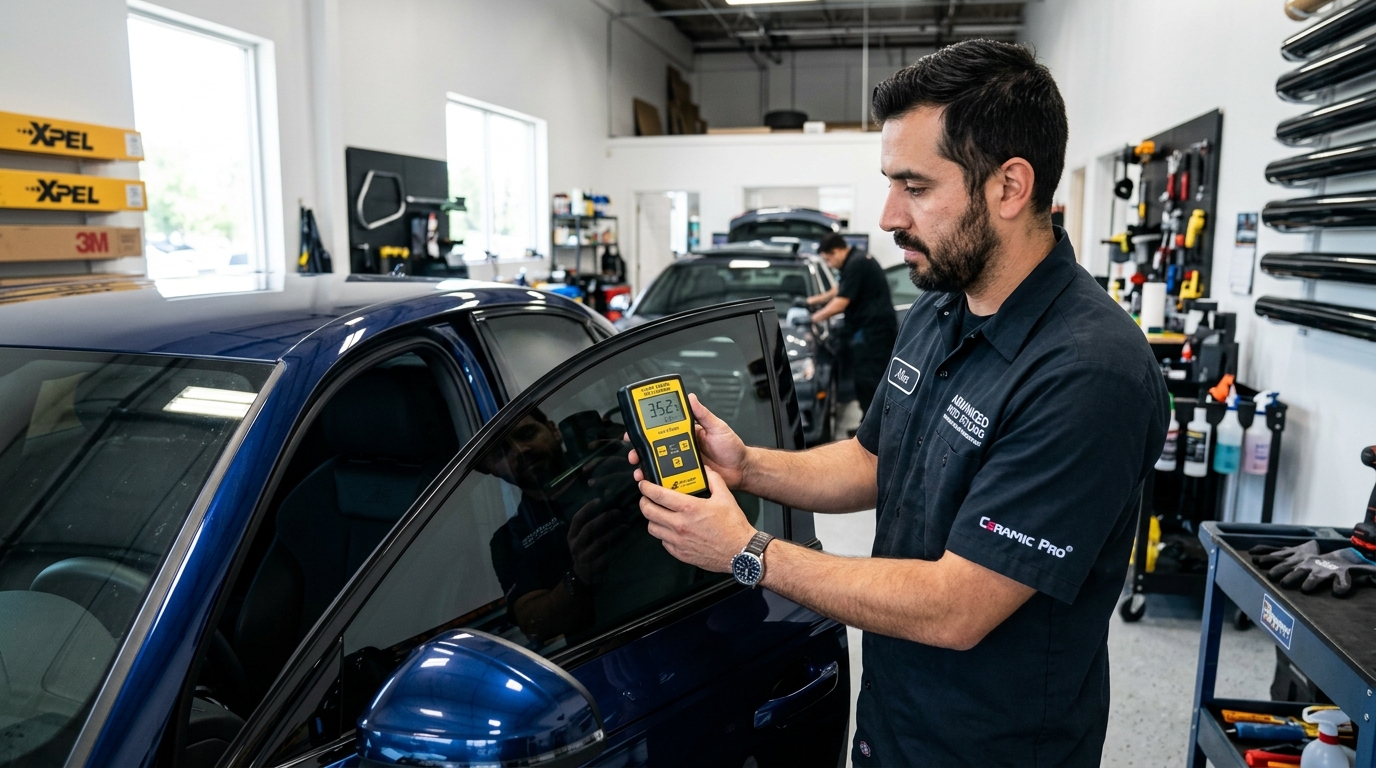
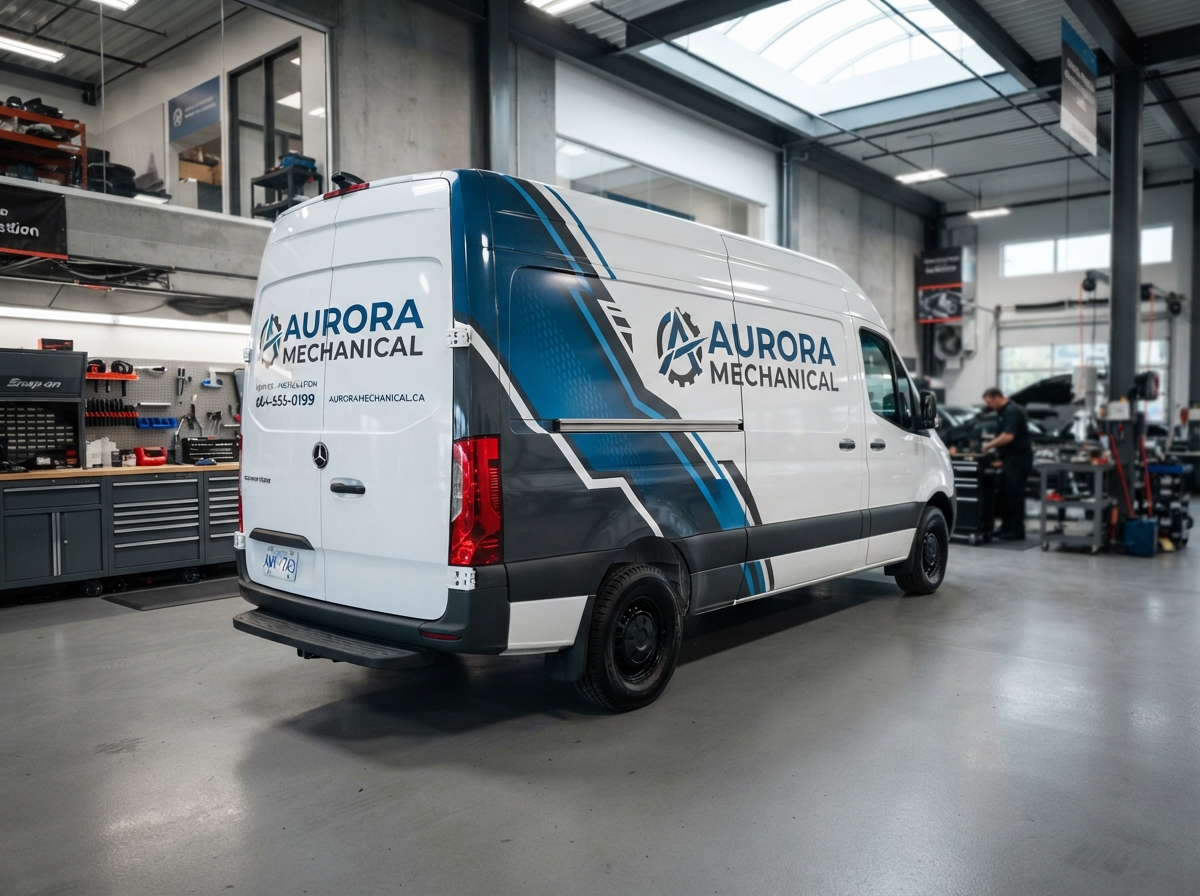
A service vehicle is often seen before a customer visits your website or makes a call. For local trades, delivery teams, mobile service providers, and growing operations, clear vehicle graphics turn everyday travel into a brand touchpoint. The strongest fleet vehicle wraps help people recognize your business, understand what you do, and know how to reach you in seconds.
For B.C. businesses, a full wrap is not automatically the right answer. Spot graphics, partial wraps, and full branded treatments can work when they suit the vehicle, service area, budget, and role in your operation. Choose coverage with purpose, then plan around daily work.
Why fleet wraps matter for local businesses
Your vehicles travel where prospective customers live and work: neighbourhood streets, job sites, parking areas, and supplier locations. Repeated visibility can make a business easier to recognize when someone needs a local service provider. A consistent graphic package also helps a multi-vehicle operation look organized before a technician steps out of the van or pickup.
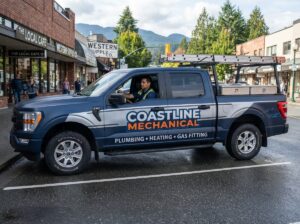
The goal is not to fill every panel with copy. Let the business name, service category, and one dependable contact path do most of the work. A concise descriptor such as “Electrical Service,” “Mobile Detailing,” or “Commercial Plumbing” is more useful than a long list that cannot be read at road speed.
Vehicle graphics also provide more flexibility than a permanent paint treatment. If your brand evolves, a campaign changes, or a vehicle is replaced, graphics can be planned around the next stage of the business. For more background on materials, preparation, and professional application, read ASC’s guide to the benefits of professional vehicle wrapping.
Choose coverage before choosing artwork
Coverage affects visual impact, budget, production time, and future flexibility. Choose the format that communicates clearly and works for how the vehicle will be used.
Spot graphics and cut lettering
Spot graphics use selected areas such as doors, tailgates, rear panels, or side windows. They can include a logo, business name, phone number, website, and short service descriptor. This is a practical starting point for a first branded vehicle or a fleet that needs a uniform look. It also works well when the factory colour supports your brand palette.
Partial wraps
A partial wrap covers a larger designed area while allowing the factory colour to remain visible. It can create a more distinctive profile than door lettering without wrapping every panel. Thoughtful use of the original paint colour can make the design feel intentional. It is especially effective on vans and pickups with broad side panels, provided the core message remains readable at normal viewing distance.
Full wraps
A full wrap provides the largest design canvas and the most control over the final appearance. It may suit businesses where brand recognition is a priority or where several vehicle models need a coordinated look. It still needs a clear hierarchy: name first, service category second, then a contact method or concise call to action.
3M’s fleet-graphics guidance similarly distinguishes decals and spot graphics, partial wraps, full wraps, and reflective graphic options. Use this as a planning reference, not as a promise that every material or configuration is available for every vehicle.
Design for fast recognition on the road
A fleet wrap should be easy to understand before it is admired. Start with your business name, what you do, and how to reach you. One phone number or short website address usually performs better than competing calls to action. Use a QR code as a supporting detail for parked vehicles, not the primary contact method for someone driving behind you.
Use a readable hierarchy
Make the company name the dominant element. Place the service category close to it, then add the contact detail where it is easy to find. Avoid placing essential copy across door seams, handles, deep body contours, or areas blocked by equipment. The rear of a van or truck can be valuable space, but it should be designed for the viewing distance of following traffic.
Match finish to the business image
Finish changes how a colour and graphic package reads in daylight and at close range. Gloss can look bright and familiar, satin can create a refined low-sheen effect, and matte can produce an understated look that requires specific care. ASC’s comparison of satin, matte, and gloss wrap finishes can help you prepare for that choice. Specialty textures can work as restrained accents on a roof, hood, or trim element. See ASC’s overview of textured vinyl-wrap finishes for examples of how texture changes the visual character of a vehicle.
Plan the rollout around your operations
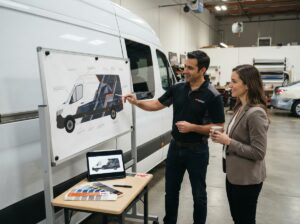
Fleet wrapping should be treated as an operational project, not only a design project. Before artwork is finalized, list the vehicles involved, body styles, paint condition, accessories, and expected replacement timing. A one-vehicle proof of concept can establish the layout and installation scope before the design moves across a larger group.
Schedule installation with your busiest days in mind. Vehicle preparation, coverage level, surface complexity, and installation-team capacity can affect timing. A planned sequence can keep enough vehicles available for service while others are completed. Keep approved artwork files accessible for future additions, panel repairs, or replacement vehicles.
Keep the fleet consistent, not identical
Vans, pickups, trailers, and compact service vehicles do not have the same usable panel shapes. The design does not need to be copied exactly to be consistent. Instead, create a shared system: the same logo treatment, core colours, typeface, service descriptor, and contact method. Then adapt the layout to each vehicle’s proportions. The fleet will feel unified while every vehicle remains legible.
Include compliance and maintenance in the scope
Branding should never obscure lights, licence plates, required safety markings, or driver sightlines. Businesses operating under a safety certificate should also confirm applicable carrier-marking requirements before finalizing artwork. Under section 37.14 of B.C.’s Motor Vehicle Act Regulations, a carrier holding a safety certificate must ensure its name is displayed on both sides of an in-service business vehicle in clearly visible letters or figures at least 5 cm high, subject to the regulation’s exemption provision.
Review the current B.C. carrier-marking regulation and confirm your own compliance needs with the appropriate authority. This article is not legal advice. Maintenance should also be part of the initial conversation. Regular, gentle cleaning helps graphics remain presentable and helps identify concerns early. Avoid abrasive tools and harsh chemicals that may affect the film. If a panel is damaged, a professional assessment can determine whether a targeted graphic replacement is appropriate.
Start with a practical fleet-wrap consultation
A successful fleet vehicle wrap begins with clear business priorities. Bring your vehicle list, logo files, primary service areas, preferred contact method, and realistic rollout timeline to the consultation. ASC can help you consider coverage options, finish direction, design placement, and installation scope for the vehicles you operate. The result should be a branded vehicle program that is readable, appropriate for your business, and practical to maintain as the fleet grows.
Ready to plan branded graphics for a service van, pickup, or growing fleet? Contact ASC Automotive Styling Centre to discuss your vehicle types, desired coverage, finish preferences, and a phased installation approach.