The Everyday Inconvenience You No Longer Have to Live With
Some driving inconveniences are dramatic — a failing engine, a broken transmission, a cracked windshield. Others are quieter and more persistent: the roll of a window crank on a hot day when you just need a little air, the extra reach to lock a passenger door before leaving a parking lot, the fumble with a key in the rain when your hands are full. These are not crises. But they happen every single day, and their cumulative effect on the driving experience is more significant than any of them appears in isolation.
Power windows and power door locks exist precisely because every driver who has ever used them has refused to go back. The convenience is not subtle — it is immediate, consistent, and felt on every drive. And for the significant portion of vehicles on Canadian roads that still have manual windows or locks — whether through age, base-trim specification, or commercial fleet configuration — the aftermarket conversion is one of the most practically impactful upgrades available.
The timing of this topic is not coincidental. As Kelley Blue Book confirmed when reporting on the 2025 Jeep Wrangler, the 2025 model year marked the end of the manual crank window in the North American new vehicle market — the Wrangler was the last production vehicle sold with hand-cranked windows, and even it finally went all-power. That milestone is a clear signal of where industry expectations now sit. For owners of vehicles that predate that standard or that arrived without it due to trim level or fleet specification, the aftermarket conversion closes that gap permanently.
What Power Window Conversion Involves
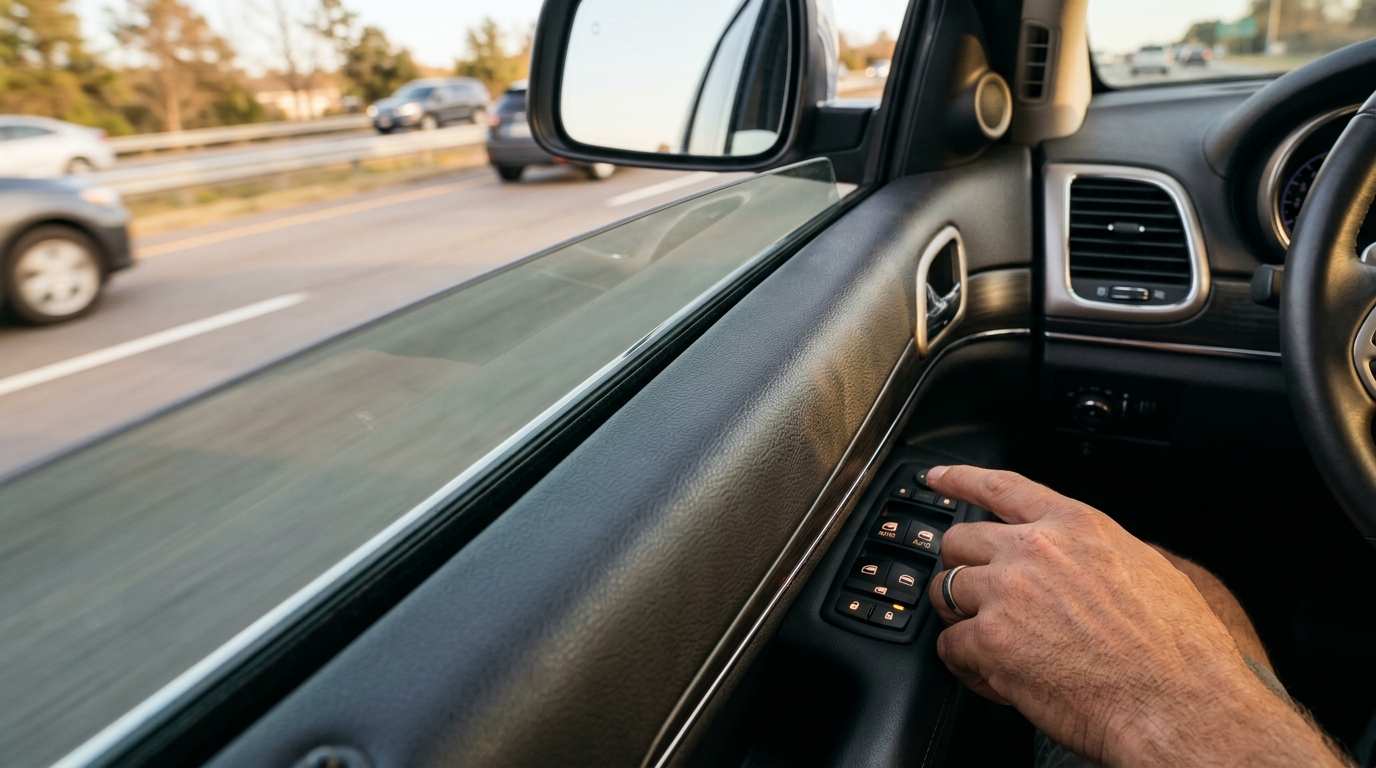
A power window conversion replaces the manual winding mechanism inside each door with an electric motor and regulator assembly that raises and lowers the glass at the press of a button. The process is contained entirely within the door — no exterior modifications, no structural changes to the vehicle, and no visible alteration to the car’s appearance beyond the switch panel fitted into the door armrest.
Front windows versus full vehicle conversion
Most drivers prioritize the front windows first. The driver and front passenger windows account for the vast majority of daily use — parking lot interactions, drive-through windows, toll booths, ventilation while driving — and converting these two alone delivers most of the practical benefit. Rear window conversion is a natural next step, particularly for families who regularly carry passengers, and completing the full vehicle in a single appointment is both more efficient and more cost-effective than scheduling separate visits. At ASC, our power window and door lock service covers front and rear window conversions across most vehicle types, giving you the flexibility to choose the scope that best matches your needs.
Power sliding rear windows for trucks
Pickup truck owners have a specific opportunity that sedan and SUV owners do not. The rear sliding window in a truck cab — when upgraded to power operation — allows the driver to open and close the back glass at the touch of a button, improving cabin ventilation and reducing the effort of managing airflow on longer drives. For truck owners who regularly use the rear window for access or airflow, a power sliding window upgrade is one of the most practical and underrated electronics additions available. ASC installs power sliding windows on trucks as part of its conversion service alongside conventional front and rear window upgrades.
How the installation works
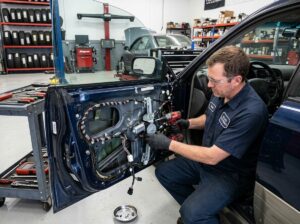
The installation begins with removing the door card to access the manual window regulator inside the door cavity. The manual mechanism is replaced with the power motor and regulator assembly, which is then wired to a vehicle-specific harness. The switch panel is fitted into the door card — either into a pre-existing location or a clean custom position that matches the door’s design language — and the door card is refitted. The entire process is clean, self-contained, and leaves no visible evidence of modification beyond the switch itself.
Power Door Locks and Keyless Entry
Power door lock conversion is closely related to power window work and is frequently combined with it in the same appointment — sharing the same installation visit, the same professional, and the same underlying motivation. For many vehicle owners, the two upgrades are a natural pair that together modernize the entire entry and exit experience.
How power lock conversion works
Manual door locks are converted to power operation by installing an actuator inside each door — a small electric motor that physically moves the lock rod in response to a signal from the switch or remote. A central locking module coordinates all doors simultaneously, so pressing the driver’s door lock button secures every door in a single action rather than requiring the driver to reach across or check individual locks. The system integrates with the vehicle’s existing lock hardware, preserving the original mechanism while adding electric operation on top of it.
Two-door and four-door locking systems
ASC offers both 2-door and 4-door central locking systems, covering the full range of vehicle configurations from coupes and extended-cab trucks to full four-door sedans, SUVs, and vans. The 2-door system is a cost-effective solution for coupe owners or truck owners whose rear doors are not a priority. The 4-door system delivers the complete central locking experience across all entry points and is the most common choice for family vehicles and commercial operators.
Adding keyless entry
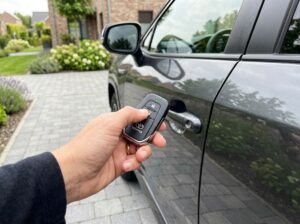
Keyless entry — the ability to lock and unlock the vehicle remotely using a key fob — is one of the most impactful additions for any vehicle without factory remote entry. The system pairs a radio-frequency fob with a receiver module installed in the vehicle. When the button is pressed, all doors lock or unlock instantly from a distance — eliminating the need to physically check each door and providing positive confirmation of a secured vehicle before walking away. For drivers who regularly carry bags, manage children, or simply want the assurance of remotely confirming the car is locked, keyless entry transforms a routine that happens multiple times every day into something effortless rather than effortful.
Security benefits beyond convenience
Central locking with keyless entry also contributes meaningfully to vehicle security. Manual door locks create inconsistency — a rear door left unlocked because the driver forgot, or a passenger door that was not pushed fully closed. A central lock system eliminates that inconsistency by securing every door in a single action every time. For vehicles regularly parked in commercial areas, urban environments, or overnight locations where opportunistic access is a real concern, that consistency is a practical security improvement rather than just a convenience enhancement. Our guide to remote starter installation explores how central locking and keyless entry integrate naturally with remote start systems for a comprehensive vehicle entry and startup upgrade.
Which Vehicles Benefit Most From These Upgrades
Power window and lock conversions are not limited to old or budget vehicles. They serve a wide range of owners across different vehicle types, ages, and motivations — and the value they deliver is consistently high regardless of the starting point.
Older vehicles and classic cars
Vehicles from the 1980s, 1990s, and early 2000s frequently came without power windows and locks as standard equipment, particularly in base and mid-range trim configurations. For owners who love their vehicle and plan to keep it — whether for daily use, weekend driving, or as a classic — a power window and lock conversion modernizes the ownership experience without touching the engine, drivetrain, or exterior character that makes the vehicle worth keeping. The conversion is fully reversible if the original components are retained, giving classic car owners flexibility alongside the convenience benefit.
Base-trim modern vehicles
Even relatively recent vehicles — entry-level hatchbacks, commercial vans, and work-spec trucks — are still delivered in base configurations without power windows or full central locking. Buyers who prioritized purchase price often find themselves wanting these features within the first months of ownership. A professional aftermarket conversion delivers the feature at a fraction of the cost difference between the base and the next trim level, without a trade-in or a new finance arrangement.
Commercial vehicles and work trucks
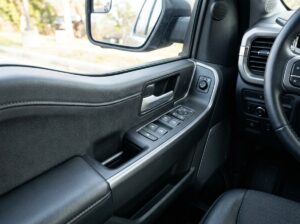
Commercial vans and work trucks frequently leave the factory in fleet specification — manual windows, manual locks, minimal creature comforts — because fleet buyers historically prioritized acquisition cost over driver convenience. But tradespeople and delivery drivers who spend eight or more hours per day in their vehicle experience the absence of power windows and central locking as a genuine daily friction point rather than a minor annoyance. A professional conversion improves the working environment meaningfully, at a cost easily justified by the daily convenience delivered over the vehicle’s working life. If you are also considering window tinting for your commercial vehicle, our post on van window tinting for privacy and security covers how that upgrade pairs naturally with power window conversion for a comprehensive van upgrade in a single visit.
Resale value considerations
Power windows and central locking are expected features on any vehicle offered for private resale. A vehicle without them — particularly one more than five years old — faces an immediate buyer perception challenge that affects both the speed of sale and the achievable price. A professionally installed conversion, completed with OEM-quality components and clean workmanship, removes that barrier and supports a stronger resale position. The upgrade cost is typically recoverable in full through the improvement in perceived vehicle value.
Why Professional Installation Matters
Power window and lock conversion kits are available through aftermarket parts retailers, and the DIY option is technically accessible for mechanically inclined owners. The question is whether the investment in tools, time, and risk is genuinely worthwhile when professional installation is available at a competitive cost.
What goes wrong with DIY installations
The most common problems with self-installed power window and lock systems involve incorrect wiring — particularly in vehicles with canbus electrical architectures, where incorrectly connected circuits can trigger fault codes, disable unrelated systems, or cause erratic behavior in the body control module. Door card removal and refitting, done without the correct trim tools and knowledge of the panel’s specific clip and fastener layout, frequently results in broken mounting points that leave the card loose or rattling permanently. Motor and regulator assemblies that are not correctly aligned within the door cavity bind under load, run slowly, or fail prematurely — often within months of installation.
What a professional installation delivers
A professional installation at ASC uses vehicle-specific wiring data, correct components matched to your exact make, model, and year, and door card handling by technicians who perform this work regularly. The result is a system that operates smoothly, integrates cleanly with the vehicle’s existing electrical architecture, and is backed by a workmanship warranty. Every switch sits flush and level, every function — up, down, lock, unlock, remote — works correctly from the first press, and the door card is refitted without damage. When you combine this upgrade with other electronics improvements — such as navigation and head unit upgrades or reverse sensors — booking everything together in a single professional appointment is both more efficient and more cost-effective than multiple separate visits.
Power windows and central locking are among the simplest upgrades to describe — press a button, the window moves, the doors lock — but their impact on daily driving quality is disproportionately large. For any vehicle that does not yet have them, the conversion is one of the highest-value, most consistently appreciated upgrades in the aftermarket. Visit our power windows and door locks page to learn more about what we install and how to book your conversion, or explore the full range of electronics services at ASC to see how power window and lock upgrades fit into a broader vehicle improvement plan.