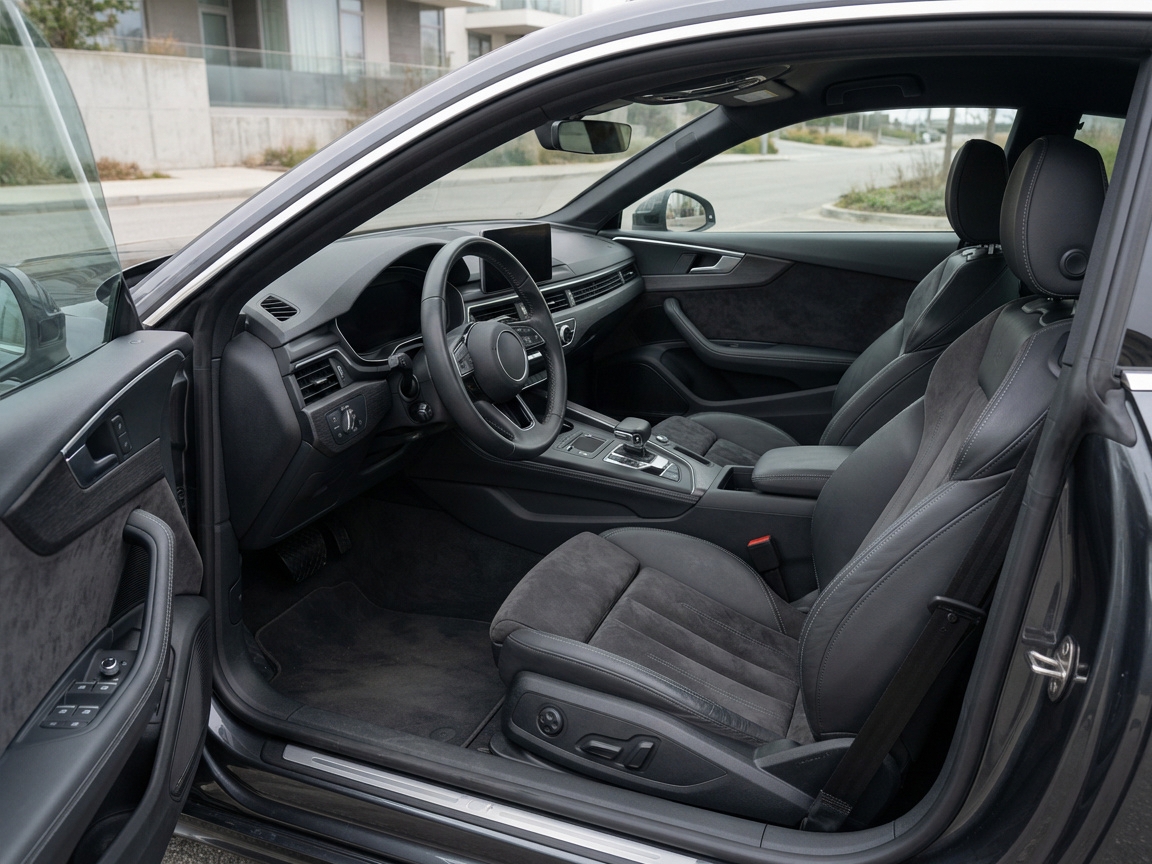
A full-leather interior is not the only way to give your vehicle a more distinctive cabin. For drivers who prefer a sportier look, microsuede car interior trim offers a soft, matte texture that can work alongside existing leather or other upholstery. Carefully chosen accents can change the interior’s character without covering every surface in the same material.
For a daily driver in British Columbia, the decision should involve more than appearance. Material quality, placement, maintenance and vehicle compatibility all matter. Here is how to assess a performance-inspired interior before committing to a custom trim project.
Understand Microsuede, Ultrasuede and Alcantara
Microsuede generally describes a synthetic microfibre material with a suede-like surface. Unlike natural suede, it is not animal hide. Its fine, raised fibres create a soft nap that can look lighter or darker when brushed in different directions. That texture is part of its appeal, but it also affects cleaning and panel matching.
Microsuede, Ultrasuede and Alcantara are not interchangeable product names. Ultrasuede is a Toray brand, while Alcantara is a separate branded material. A generic fabric advertised as “Alcantara-style” is not necessarily genuine Alcantara and should not be assumed to have the same specifications.
For example, Toray’s automotive Ultrasuede product information describes a formulation designed for vehicle interiors, with stated durability and flammability properties. Those specifications belong to that product, not every suede-look fabric.
Ask for the exact manufacturer, product line and intended application. A household upholstery swatch may look appealing without being suitable for automotive use. Request information about abrasion, colourfastness and heat exposure, and review the backing as well as the visible surface.
Use Performance-Inspired Accents Instead of Full Coverage
The performance-inspired look often comes from contrast rather than extensive retrimming. A matte seat insert beside smooth leather, or a coordinated door-panel accent, creates visual interest while retaining familiar finishes elsewhere.
This approach appears in current production vehicles. Toyota Canada’s 2026 GR86 announcement describes Ultrasuede-trimmed sport seats in the Yuzu edition and Ultrasuede-and-leather upholstery in the Premium grade. It is a useful design reference, not proof that an aftermarket project can reproduce the factory seat’s construction or performance.
You do not need a sports car to borrow that design approach. A restrained accent package can suit a coupe, sedan or SUV. Start with one clear objective, such as adding texture to an otherwise uniform black cabin. ASC’s guide to vehicle interior upgrades provides broader context for coordinating trim with other interior changes.
Compare Leather and Microsuede for Everyday Use
Feel and Visual Character
Leather offers a grained or smoother surface, depending on its finish. Microsuede brings a softer, low-sheen appearance and a more textured touch. Compare physical samples in your vehicle rather than relying on photographs. Lighting changes their appearance, and your clothing can affect how each surface feels.
Some automotive suede-like materials are designed for breathability, but that does not make every microsuede seat cooler. Foam, backing and seat construction also influence comfort. ASC’s car leather selection guide can help you explore the leather side of a mixed-material design.
Wear and Cleaning Commitments
Neither option is automatically maintenance-free. Leather care depends on its coating and manufacturer instructions. Microsuede can collect lint, while body oils and repeated contact can flatten its nap. Think about pets, work clothing and frequent passenger use. Choose the specific material and location around your habits, not a blanket promise of superior durability.
Choose Suitable Locations and a Coordinated Palette
Seat Inserts and Selected Trim Panels
Discuss seat centres and door inserts as possible accent areas. A headliner or selected dash trim may also be considered, but each introduces different installation constraints. Dashboard work needs particular care around airbag openings, controls and glare. Headliner changes must preserve clearance and the correct attachment method.
Steering-wheel microsuede deserves a separate conversation. It is a high-contact surface exposed to hand oils and frequent friction. Confirm whether the proposed material and retrimming method suit the wheel without affecting controls, the airbag or secure handling. A lower-contact accent may better match your maintenance expectations.
Keep Colours and Stitching Consistent
Charcoal microsuede with black leather creates a subtle combination. Muted grey or a restrained coloured insert can add contrast without overwhelming the cabin. Review samples beside the existing seats, door trim and dashboard in daylight. Keep stitching coordinated, and check nap direction across adjacent panels so matching materials do not appear unintentionally different.
Follow Material-Specific Cleaning Instructions
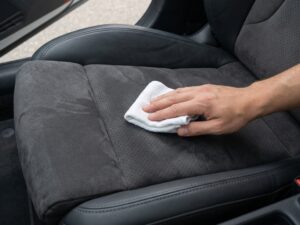
Identify the installed product before choosing cleaners. Alcantara’s official maintenance guidance recommends a soft brush or dry cloth for daily dusting and a slightly damp white cotton cloth for weekly care. It warns against direct steam, bleach, aggressive solvents and excessive heat.
Ultrasuede’s care instructions recommend periodic vacuuming, gentle wiping with a well-wrung damp cloth and brushing once fully dry. Avoid over-wetting. These examples show why one cleaning routine should not be applied indiscriminately to every suede-like material.
For installed trim, follow the installer and material manufacturer’s instructions together. Adhesives, foam and backing may impose additional limits. Do not assume a washable fabric means an assembled seat cover can be machine washed.
ASC’s interior detailing tips offer general cleaning context. Keep leather conditioner off microsuede unless its manufacturer specifically approves it, and seek advice for persistent stains rather than scrubbing harder.
Plan Your Interior With an ASC Consultation
Bring vehicle details, cabin photographs and a few reference images to your consultation. Explain which surfaces you want to change, your preferred feel and how much routine care you are comfortable doing.
Safe fitment must come before styling. Seat-mounted airbags and their deployment seams require vehicle-specific assessment. Occupancy sensors, heating elements and ventilation must remain compatible with the proposed work. Material thickness, adhesives and clearances also matter. A fabric’s automotive specification alone does not establish that a completed retrofit is safe.
ASC’s trim and upholstery services provide a starting point for discussing custom interior options. Ask the team to confirm available materials, including any genuine branded products, suitable locations and the installation scope before approving a design.
Request a written proposal identifying the selected fabric, the panels included and any preparation needed beneath the upholstery. Ask how the finished work will be checked and what care or warranty guidance you will receive. Review a sample combination before ordering, particularly when matching an older factory interior. If your budget favours a smaller project, discuss a limited accent package rather than assuming every seat and panel must change together. Confirm material lead times and expected vehicle downtime so the project fits your schedule as well as your design preferences.
The strongest alternative to full leather is not necessarily more fabric. It is a considered combination that suits your vehicle, looks coordinated and fits your everyday ownership routine.