Modern camera technology has changed how drivers see the space around a vehicle. Back-up cameras are familiar on new cars, trucks, SUVs, and minivans, but many older vehicles still rely on conventional mirrors and a shoulder check. A 360-degree camera retrofit or digital rear-view mirror can be a practical automotive-electronics upgrade.
The important word is retrofit. These systems are not universal accessories that should be fitted the same way to every vehicle. Screen compatibility, camera placement, wiring paths, existing safety equipment, and the owner’s needs all affect what is appropriate. A professional assessment helps establish whether a reverse camera, surround-view system, digital mirror, or a simpler camera solution is the right next step.
Why visibility upgrades matter for older vehicles
Parking areas, tight driveways, busy school zones, and crowded job sites make low-speed awareness important for every driver. A rear camera gives the driver a view directly behind the vehicle when reverse gear is selected. A multi-camera system can combine views from the front, rear, and sides to create a wider perspective around the vehicle. A digital rear-view mirror uses a rear-facing camera to provide an alternative, camera-based rear view while driving.
These features are now part of the technology many drivers expect from a newer vehicle. Transport Canada notes that back-up cameras are required on new passenger cars, SUVs, light pickup trucks, and minivans in Canada. Its back-up camera guidance is also a useful reminder that technology supports attentive driving rather than replacing it.
For an older vehicle, the benefit is not only convenience. A well-chosen system can make a narrow parking space easier to judge, help a driver understand the space behind a long vehicle, and add a familiar modern feature to a vehicle that still fits daily use.
Know the difference between the systems
Camera-related vehicle upgrades use similar language, but they solve different problems. Knowing the basic distinctions makes a consultation more productive and helps avoid paying for features that do not match the way you drive.
Reverse cameras
A reverse camera is the most focused option. It activates when the vehicle is placed in reverse and displays the area behind the vehicle on a compatible screen or mirror. It can be a practical entry point for drivers who mainly want better visibility while backing into a driveway, parking stall, or loading area. The final camera position and display solution must be chosen for the vehicle, not copied from a generic installation video.
360-degree camera systems
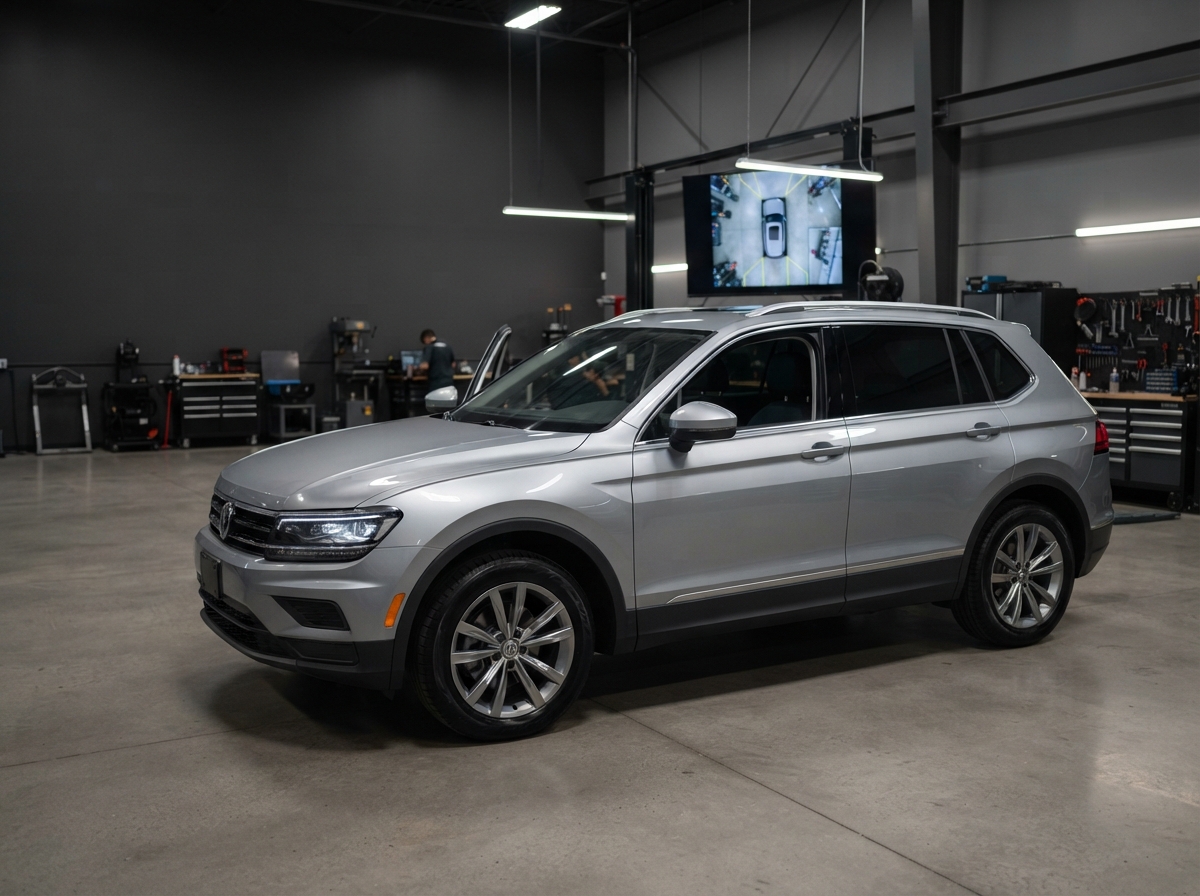
A 360-degree, or surround-view, system uses several cameras to build a composite view around the vehicle. It can help when manoeuvring a larger SUV, pickup, van, or vehicle with limited sightlines. The installation needs careful camera placement, calibration, and display integration. Not every vehicle can support every system, so check compatibility before a purchasing decision.
Digital rear-view mirrors
A digital rear-view mirror offers a camera view as an alternative to the conventional reflected mirror view. Current OEM systems illustrate the concept well. Cadillac describes its Rear Camera Mirror as an available feature that can provide a wide, less-obstructed view behind the vehicle and allow brightness, vertical-tilt, and zoom adjustments. Review Cadillac’s Rear Camera Mirror overview for an OEM example. A retrofit may not duplicate an OEM feature set, so ASC should confirm the available options and vehicle-specific scope before any work is planned.
Start with vehicle compatibility
A clean retrofit begins with the vehicle, not the product box. Identify the year, make, model, trim level, and current electronics. Does the vehicle have a factory screen, aftermarket head unit, or no suitable display? Is there a factory camera, parking sensor, steering-wheel control, or driver-assistance feature that needs to remain functional? These details shape the practical choices.
Vehicle architecture also matters. Cameras need secure mounting positions that provide a useful angle without interfering with tailgates, hatch releases, licence-plate lights, or original equipment. Cables must avoid moving parts, moisture-prone areas, and components that should not be disturbed. The display should be visible quickly without obstructing the driver’s forward view.
Older vehicles may benefit from pairing a camera upgrade with an infotainment refresh. ASC’s article on aftermarket infotainment upgrades explains why a vehicle-specific screen, dash kit, and integration approach matter. If a display upgrade is appropriate, it may create a better foundation for compatible camera technology. For a wider view of connected upgrades, see ASC’s article on smart car technology integration.
Professional installation protects the details
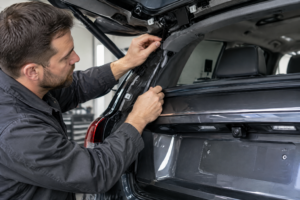
Camera hardware is only part of the result. Installation quality affects image angle, reliability, interior appearance, and the way equipment works with existing electronics. A professionally planned installation starts with an inspection and clear scope. It should define the cameras, display method, cable routing, calibration needs, and retained features before panels are removed.
Routing and weather protection
Rear and side cameras face rain, road spray, dust, and changing temperatures. Connections need appropriate protection, and exterior cable routing should be planned carefully. Inside the cabin, wires should be concealed where possible and must not create distractions, interfere with airbags, or leave loose sections near pedals or controls.
Testing the complete system
Before the vehicle is returned, the installer should test image quality, switching behaviour, display visibility, and adjustment settings. If a system includes multiple cameras, calibration is important so the stitched view makes sense around the vehicle. Ask about cleaning the lens, using the display safely, and what to do if image quality changes.
Use cameras as driver-assistance tools
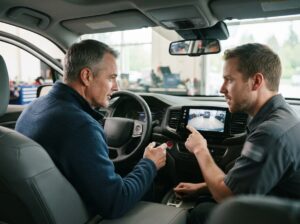
A camera can improve awareness, but it does not see everything or make decisions for the driver. Rain, darkness, glare, dirt on the lens, and nearby people or objects can affect what is visible. Transport Canada advises drivers to reverse slowly, check the display and mirrors, and look over their shoulder. Those habits remain essential.
This is especially important for 360-degree views. A stitched image can be useful for low-speed positioning, but it may alter perspective or make distances difficult to judge at a quick glance. Use the screen as one source of information alongside mirrors, shoulder checks, and normal caution. Keeping the camera lens clean and learning the system’s viewing angles will help it deliver the best practical value.
Build the right electronics package with ASC
A visibility upgrade can be part of a broader plan for an older vehicle. For example, a vehicle owner may want a new display, a reverse camera, and cleaner phone integration. Another driver may simply need an improved view behind a work van or family SUV. The right package depends on the vehicle, the daily use case, and the available compatibility options.
Camera technology also complements other electronics work. If you are already evaluating recording technology, ASC’s guide to professional dash-cam installation explains the value of careful cable routing and a vehicle-specific setup. A dash cam records driving events, while a reverse or surround-view camera is intended to support live, low-speed visibility. The systems can be discussed together, but they have different roles.
Book an ASC automotive-electronics consultation to review your vehicle, visibility goals, and existing equipment. The team can assess compatibility and recommend an appropriately scoped camera or related-electronics solution. Final availability and installation options should be confirmed for your specific vehicle.